Trackhawk GPS, headquartered in Houston, TX, was founded just two years ago, but the team brings more than 30 years of experience in the automotive industry. They identified a specific gap that many existing tracking solutions were missing for dealerships and rental companies. The biggest issue was not necessarily tracking the location of vehicles – it was control.
Highlights
Most companies in the industry can tell you where your fleet vehicles are located, but can’t help you prevent something from going wrong in the first place.
When dealing with such a complex market, one of the first decisions is choosing the right hardware lineup – whether to use kill switch trackers, OBD devices, or asset trackers. The Trackhawk GPS team built their hardware around real-world use cases and spent tons of time understanding their customers’ unique business needs.
Kill switch devices became a game-changer for businesses facing a high risk of asset loss, such as rental companies and BHPH dealerships. These devices can prevent a vehicle from starting in cases of theft, misuse, or missed payments.
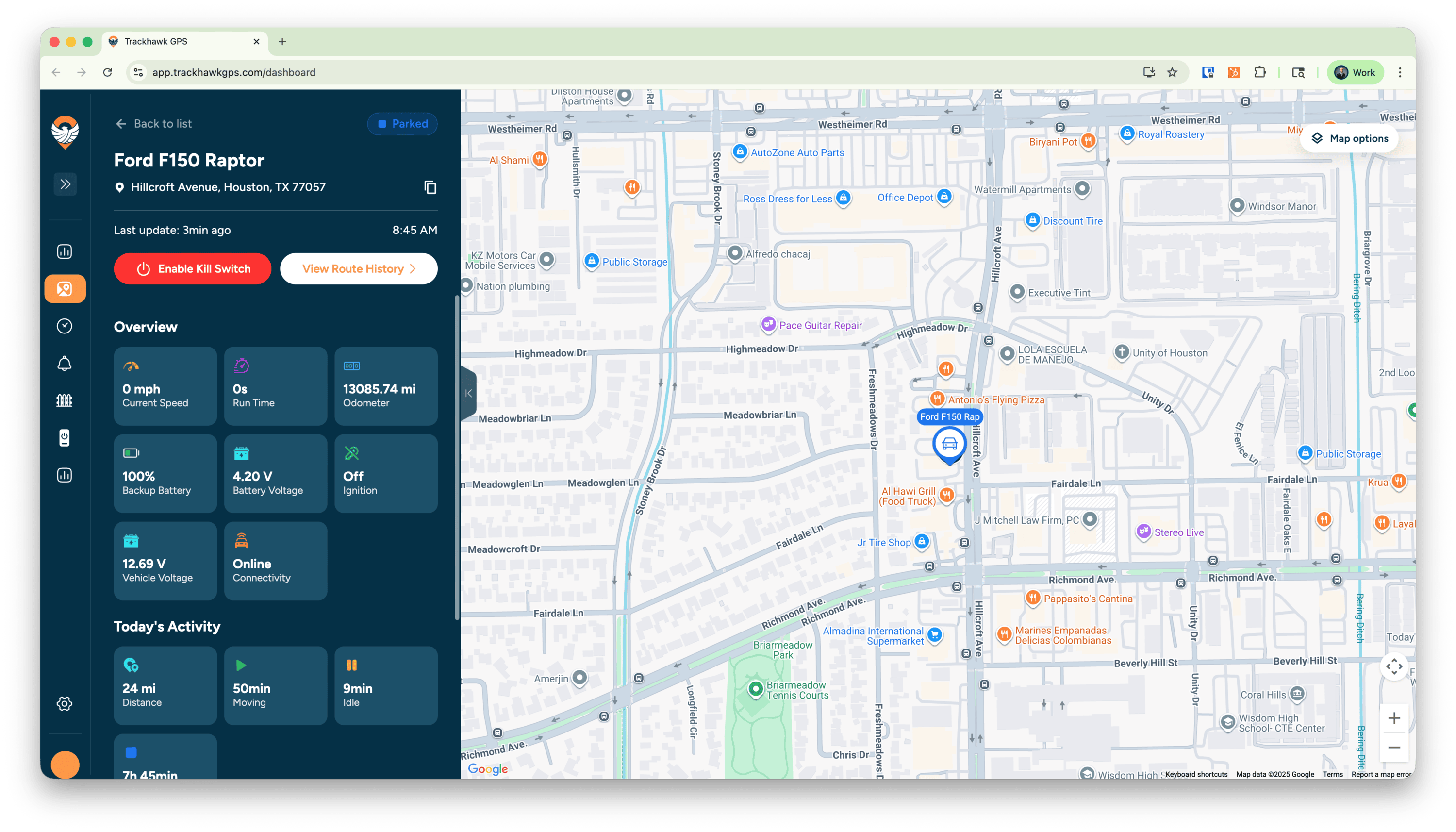
The company's OBD devices were built for speed and simplicity. And their asset trackers for trailers were designed for scale, ease of use, extreme environments, and very long battery life.
So what does a typical Trackhawk GPS customer look like? Their customers range from independent used car dealerships to enterprise-grade auto malls. Dealerships often struggle with missed or skipped payments and high-risk buyers, so they need more than just visibility – they need control.
For rental operations, the company specializes in over-the-road rentals, from economy to luxury vehicles, as well as trailer rental companies. These businesses care deeply about unauthorized use, toll recovery, and damage disputes, making real-time visibility and enforcement critical.
Trackhawk GPS also serves traditional fleet customers, such as field service businesses looking for operational efficiency, driver accountability, and better insight into asset utilization.
Integration
When discovering flespi, the team was looking for a flexible telematics backend. A platform that could support multiple hardware manufacturers without locking them into a single device ecosystem was the main goal.
"Another big reason we chose flespi was the speed and flexibility of implementation. It allowed us to bypass developing our own ingestion layer so we could focus on building customer-facing value from day one, instead of spending time solving low-level telematics problems."
Basically, the data flow looks like this:
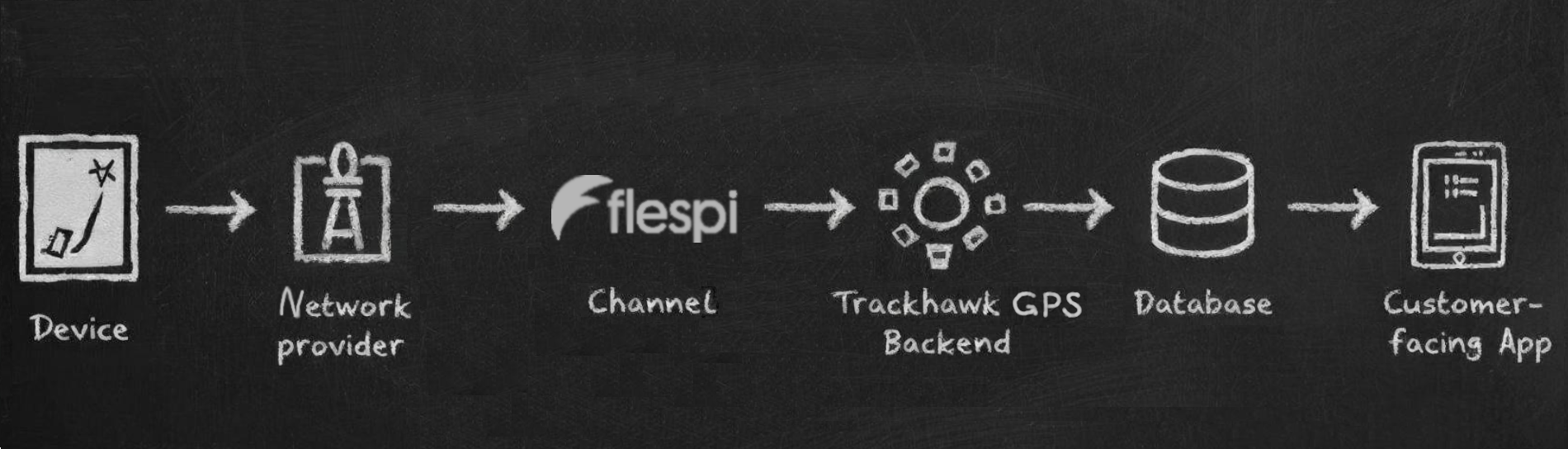
The device reports location, ignition, speed, voltage, event data, and other telemetry into flespi. Their application processes the data from the platform and makes it meaningful for the end user.
The team uses channels, devices, webhooks/streams, commands, logs, and raw messages for troubleshooting. Channels help them connect different hardware manufacturers into a unified backend that normalizes incoming telemetry data before routing it into their own software with a modern user interface. This allows them to onboard new hardware quickly, since flespi already supports most of the major protocols relied on.
The kill switch is one of the most important features offered, so it is treated differently from a normal button click. The flow looks like this: command queue → safety checks → relay control. A customer action is taken and validated in their own backend. Once the command has been validated, it's sent to flespi, where it is delivered and executed at the device level.
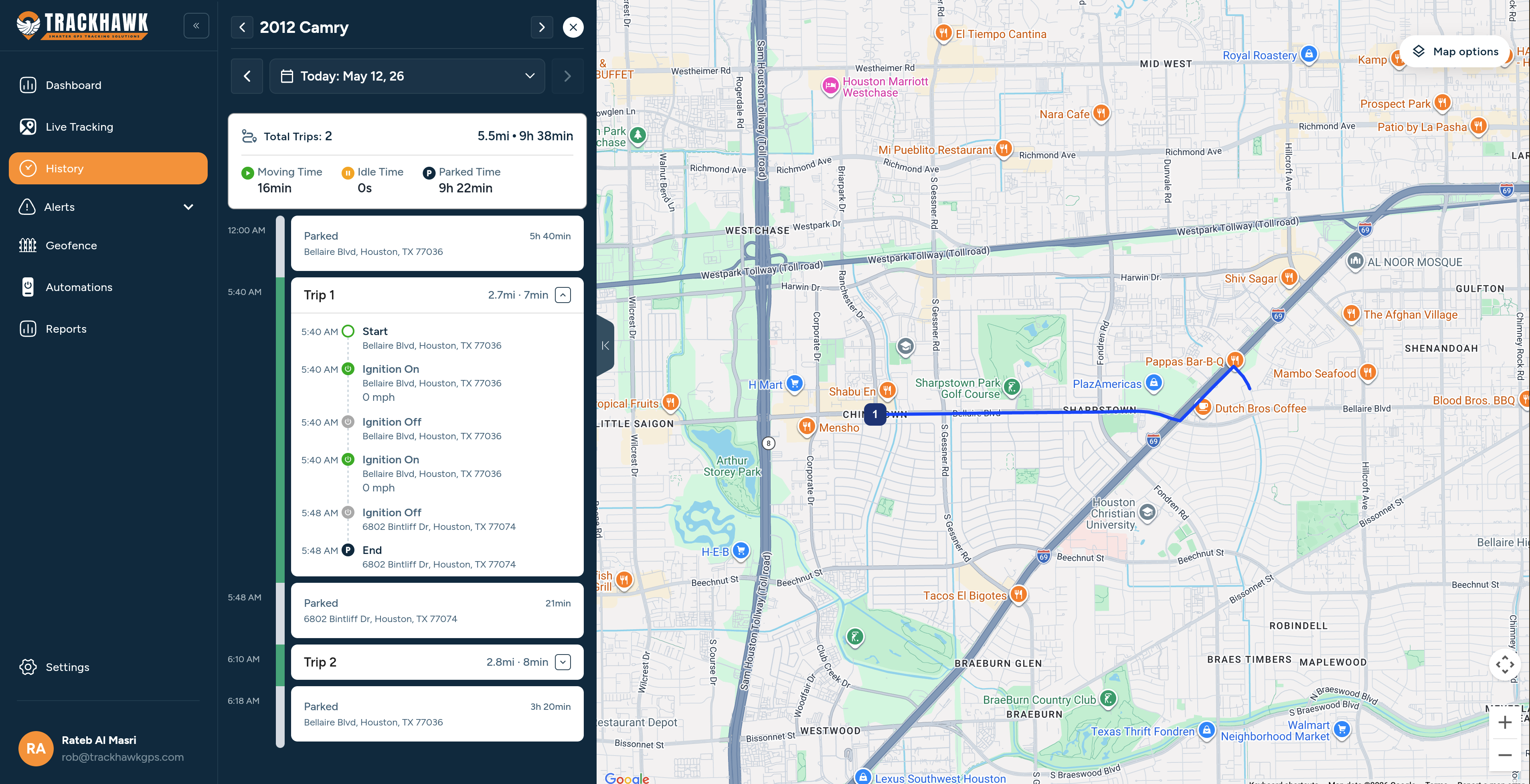
Trackhawk GPS can also stream data into other systems, whether it’s Wialon or a third-party server. Calculators are where some of the real magic happens for them. The team uses them extensively for business logic, alert generation, trip processing, idling thresholds, and much more.
Challenges
The phase the company is in now is really more about growing pains than basic integration challenges. They've reached a point where the Trackhawk fleet is growing steadily, device volume is increasing, customer expectations are rising, and the complexity of real-time telematics systems starts compounding very quickly. Once you move beyond a few hundred devices and start managing thousands of active assets generating constant telemetry, architecture decisions become extremely important.
"One of the biggest lessons we learned is that telematics is fundamentally a real-time data engineering problem. It’s not just “GPS dots on a map.”
You’re dealing with high-frequency ingestion, real-time event processing, stateful trip calculations, alerting systems, device command pipelines, webhook orchestration, geofence processing, historical replay, and customer-facing live updates – all of which must happen reliably and with very low latency.
"Flespi gave us an incredibly strong foundation for the ingestion and normalization layer, but we still had to architect the surrounding infrastructure correctly." // Rob Almasri, CEO at Trackhawk GPS.