HTTP-FLV video streaming with sub-1-second latency, rolled out yesterday, marks the efforts we’ve put into video functionality and its continuous development over the past two years. By now, we’ve accumulated plenty of data on manufacturers and their video devices, so it’s clearly time to introduce another rating, taking a closer look at the leaders and their pros and cons.
We’ll try to do this as honestly as possible, combining with an unbiased view from our codi. It meticulously logged every flaw, drawing the overall picture to better understand where they succeeded or slightly missed the target. All the data presented as of February 1, 2026.
Streamax
Most popular model: AD plus 2.0
6,278 out of 12,217 video devices connected
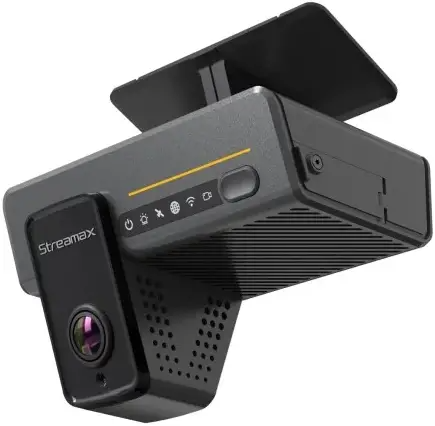
How it's used: Primarily deployed in commercial transport fleets – logistics companies, bus operators, and long-haul trucking. Customers use it as an all-in-one AI dashcam for real-time fleet safety monitoring, combining ADAS collision/lane warnings with DMS fatigue and distraction detection. Typical workflow: device auto-captures event clips, fleet manager reviews them remotely via live streaming or on-demand playback.
Pros:
- Full video suite out of the box – live streaming, historical playback, video download, timeline, photos – all work. No feature gaps compared to MDVR-class devices, but in a compact dashcam form factor.
- AI-powered safety – ADAS/DMS 2.0 algorithms detect not just basic events but microsleep, cognitive distraction, and even BSD (blind spot detection) with object classification. This is genuinely ahead of most competitors in the dashcam segment.
- OBD power supply, easy install – mounts behind the rear-view mirror without obstructing the driver's view. No complex wiring harness needed for basic deployment.
Cons:
- Hardware resource ceiling – the device realistically handles 2–3 concurrent video streams. If ADAS/DMS alarms are firing frequently while you're also requesting video, you'll hit "lack of resource" errors. This is a hardware limitation, unfortunately.
- Separate alarm linkage for images vs. video – a non-obvious configuration split that catches many users. You can have DMS alarms triggering photo snapshots perfectly while video recording stays silent because it's configured in a different settings section.
Notably, this model requires the most engineering fixes. Our short note is that the manufacturer’s documentation is often incomplete, and several features were discovered through reverse engineering.
Jimi IoT (Concox)
Most popular models: JC450
419 out of 1,210 video devices connected
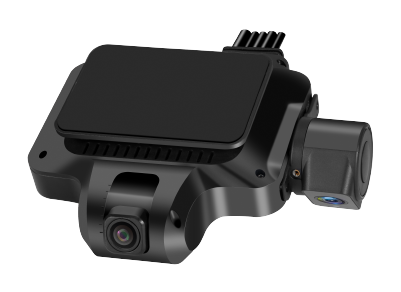
The proprietary protocol is basically a JT808 variant with HTTP fallback for video. The key differentiator is a very strong price-to-performance ratio: live streaming works well, and video download is supported for ADAS/DMS events.
How it's used: A versatile LTE dashcam system for commercial vehicles supporting up to 5 camera channels. Deployed in fleet management, logistics, and public transportation for real-time video monitoring, ADAS/DMS safety alerts, and incident documentation. Runs on Android 7.1, which gives it more processing power than simpler dashcams. Popular in price-sensitive markets where customers need multi-camera video telematics without MDVR-level investment.
Pros:
- Up to 5 cameras at dashcam price – the JC450 supports 5 video channels with ADAS and DMS, which puts it in a unique price-to-feature sweet spot. Competitors offering similar channel counts are typically full MDVRs at 2–3× the cost.
- Full video suite including live streaming – unlike Teltonika, the JC450 supports live HLS streaming, on-demand video download, playback, and timeline queries. Real-time dispatcher monitoring is possible.
- Active manufacturer support – Jimi IoT is responsive to integration feedback and regularly releases firmware updates addressing reported issues. The device ecosystem is actively evolving.
Cons:
- Configuration is SMS-command-heavy — initial setup requires sending multiple SMS commands. There's no app-based setup like Streamax or Howen. For large deployments, this means scripting or manual per-device configuration.
- GPS accuracy quirks – the JC450 has a confirmed firmware bug where it reports positive speed (3–5 km/h) when stationary, and misses positioning data at sharp 90° turns. Both are scheduled for firmware fixes, but in the meantime, they affect trip detection and driver scoring accuracy.
Howen
Most popular models: Hero-ME40-04
321 out of 1,157 video devices connected
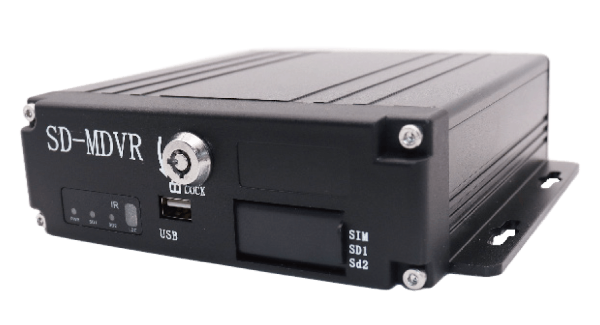
Complete video functionality with AI dashcam features is available in both Hero-ME40-02 and Hero-ME40-04 models, as in Hero-MC30-01 and Hero-MC30-02, which are more affordable 2nd-generation dashcams on the market.
How it's used: Deployed as a multi-camera MDVR in logistics trucks, public transport, and construction fleets where comprehensive cabin and exterior surveillance is needed. Supports up to 4 AHD + 1 IPC camera inputs, so customers typically wire front, rear, cabin, and side cameras. Used for incident investigation, driver behavior monitoring, and compliance evidence. Quick note: it's essentially the "workhorse" MDVR – it does everything, but it's not a plug-and-play dashcam.
Pros:
- True multi-channel MDVR – 4 AHD 1080p + 1 IPC channel gives serious coverage. HDD/SSD slot (up to 2TB) means weeks of continuous recording without worrying about SD card limits.
- Full video telematics in flespi – live streaming, playback, download, timeline, event-based capture – everything works. Among the most complete integrations we have.
- Flexible storage options – dual storage (SD card + HDD/SSD) provides both quick-access event clips and deep archival recording. Good for fleets that need both real-time alerts and post-incident forensics.
Cons:
- Installation complexity – wiring 4–5 cameras with aviation connectors, RS232/RS485 peripherals, and power management is a professional installation job. Not something a fleet manager does over lunch.
Queclink
Most popular model: CV200XEU/XNA
656 out of 678 video devices connected
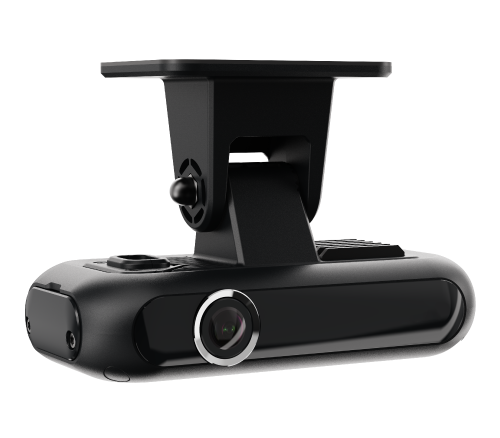
How it's used: Positioned as a smart 4G dashcam for fleet safety and compliance. Customers deploy it in commercial vehicles for driver behavior monitoring, accident documentation, and – uniquely – tachograph data collection (CV200 supports .ddd file downloads). Common in European logistics fleets, where both video evidence and tachograph compliance are required from a single device.
Pros:
- All-in-one: dashcam + telematics + tachograph – the CV200 is one of the very few devices that combine video recording, GPS tracking, and tachograph integration in a single unit. For European fleets subject to AETR regulations, this eliminates the need for separate hardware.
- Detachable secondary camera – front FHD + detachable 720p interior camera gives flexibility. You can point the second camera at cargo, cabin, or rear, depending on the use case.
Cons:
- TF card dependency – the device is very sensitive to SD card quality. Wrong format (must be FAT32), insufficient speed class, or card degradation leads to video failures. Users report "TF card abnormal" errors more often than with competing devices.
- FTP configuration friction – video uploads rely on FTP, and the automatic FTP setup can fail due to corrupted packets. When it fails, manual configuration is needed, which isn't intuitive for non-technical fleet managers.
- Firmware version sensitivity – different firmware versions send slightly different packet structures. A firmware update on the device can break parsing until flespi catches up, or vice versa. This creates a "which firmware am I on?" troubleshooting step that other manufacturers handle more gracefully.
Teltonika
ADAS, DSM, DualCam, DashCam
Number of video devices connected: 433
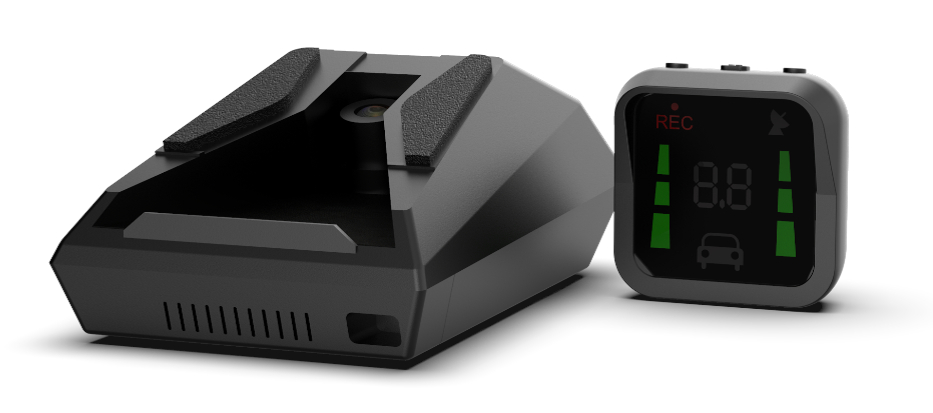 More than 484k devices in total, though quite a few videos. We’ve already published a hands-on review where we introduced these four devices. A crucial distinction here is still the absence of live streaming – it means that only event-based recording is available. In general, users work with DualCam tightly coupled with FMC640/FMC650.
How it's used: For customers who already run Teltonika fleets, add cameras to existing devices – no separate video platform needed. Primary use case is event-based evidence collection: harsh braking triggers a photo, a crash triggers a video clip, periodic snapshots document driver behavior. Popular in car sharing, taxi services, international logistics, and insurance telematics.
Pros:
- Leverages existing Teltonika infrastructure – if you already have FMC640/FMC650 trackers deployed, adding a camera is just an RS232 cable and configuration change. No new SIM cards, no new server connections, no new platform subscriptions.
- Strong event-based automation – the tracker handles all the intelligence (geofences, I/O triggers, crash detection), and the camera just captures evidence on command. This separation of concerns works well for fleets that need "proof when something happens" rather than continuous monitoring.
- Broadest tracker ecosystem – Teltonika is #1 on flespi with ~480k devices. The camera accessories inherit all the tracker's features (CAN bus, BLE sensors, tachograph on FMC640/650), creating a genuinely integrated telematics + video solution.
Cons:
- No live streaming – this is the biggest gap. The RS232 serial link between camera and tracker simply doesn't have the bandwidth for real-time video. If your use case requires a dispatcher watching live feeds, Teltonika cameras are not the answer.
- Slow media transfers – even on 4G devices, a 10-second video clip can take 1–2 minutes to upload. On 2G devices (FMC125), it's practically unusable for video – photos only. This is a fundamental hardware architecture limitation.
JT808 / JT1078
Number of devices connected: 860
This protocol officially refers to a long “JT/T 808-2019 with the JT/T 1078-2016 video extension” and is standardized across many Chinese manufacturers. The video feature set includes live streaming, video playback and download, timelines, and photo capture, along with ADAS/DMS technologies supporting up to five cameras.
Pros:
- Full video suite – live streaming, playback, download, timeline, photos, ADAS/DMS – everything works through a single standardized protocol.
- Cost-effective hardware – JT808 devices are typically 30-50% cheaper than equivalent Streamax or Queclink hardware, making them attractive for price-sensitive markets.
Cons:
- "Works differently on every device" – the standard is loose enough that two JT808 devices from different manufacturers may behave completely differently for the same command. Users expect consistency and don't get it.
- No manufacturer-specific optimization – with the generic device type, there's no tailored parsing, no model-specific commands, no firmware-aware handling. Users who need that level of polish should request dedicated integration.
Although JT808 is a standard and only one generic model is supported, different hardware manufacturers implement it differently. We regularly receive requests to add another scope of models, so you subscribe to the changelog updates to stay tuned, or even reach out to us if you’d like to discuss your own integration.
Summing up
Overall, video telematics devices show a wide range of maturity levels – from stable, well-documented implementations to powerful hardware with configuration-heavy or firmware-driven limitations. The pie chart shows the brands aligned by the number of connected devices:
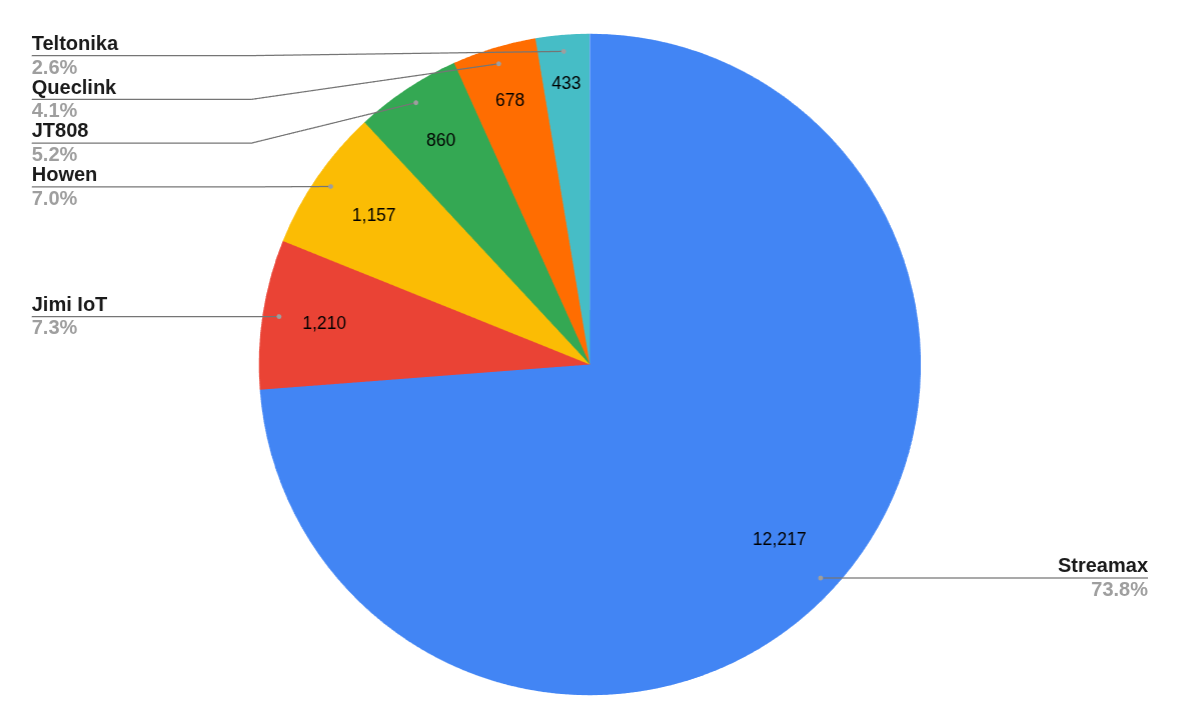
We will revisit this overview annually: with more data coming in and new models entering the platform, the distribution on the chart may well look quite different next time.