flespi AI agents were introduced in the last days of summer, and now we have over 700 of them up and running. So we thought it would be a great moment to collect some feedback on how they're used, what has been changed, and what could be improved. Real story goes: nothing without a good talk, and today we're hosting Piotr Fuz, CEO of SignatiGPS – a company that operates a fleet management and GPS tracking platform serving customers across Poland since 2009. Its team uses our platform as backend infrastructure for vehicle monitoring, aviation telematics, and video tracking solutions.

CEO at SignatiGPS
AI: how it started
“For me it was a bit different, because I already knew Codi [flespi AI Assistant] – how it works and how fast it gets better every day. I love that we can sort out questions in the chat without waiting for a real person. When the agents came out, I wasn't sure what we could do with them. Then I read about it, and the fantastic part was that the agent doesn't just tell you how to do something – it actually does it. It creates a new channel, makes edits, finds disconnected devices, and sends a command to many devices at once to change the camera codec. That amazed me. What I didn't know was that you can build whole apps with the agent. We only figured that out in the last couple of weeks, and I was amazed by how fast it works and how good the result is – literally from scratch.
From idea to app takes half an hour, maybe an hour. You tweak it a bit, add your thoughts, change a few things. Honestly, it was a shock how fast it happens. I code every day, I know how things work the standard way – and with AI, everything is simply faster. What's great about flespi is that it's not a general-purpose chatbot that only understands the basics. The agent knows the whole flespi infrastructure.
Aliaksei [Aliaksei Shchurko, Chief Gurtam Architect] showed us that we can upload our own app documentation to the agent. So in the future, when we need to investigate a problem with a device, the agent won't only look at the flespi side. It could also call our API and check whether the customer is active, whether the new firmware is installed, whether the SIM card data is up to date – things you simply can't see from flespi alone. That's very promising. I also saw that the flespi agent can become part of our own software, so our customers could ask it for help directly in our system. I think that's exactly where this is going.
“Automation I used to handle manually”
A fresh example from a few days ago. We use Queclink CV200 cameras, and a new firmware made it possible to switch from codec H.264 to H.265. That's about 40% less data – a big deal over LTE: faster transmission and much lower traffic costs.
Before, I had to find the cameras, check each one for the right firmware, and check whether the new codec was already set. Now it's one request in flespi: find all cameras with firmware that supports the new codec and send them the command. I first switched a few cameras by hand as a test, then let the agent handle the rest. And it's not only about sending commands – I can ask it to find which devices need a change or a firmware upgrade in the first place.
Another example from a few weeks ago: I wanted to find cars parked at night that still showed ignition on – obviously not true – and cars driving with ignition showing off. Flespi Agent found them very quickly and proposed a fix.
Just a few commands to repair everything
In the end, it was just a few commands to repair all those devices. That's real help, because flespi is growing and so are we. Of course you're growing much faster – you have millions of devices, we have thousands – but every single day we build something new. In this business, software development never stops.
Recently, Aliaksei and I talked about an aviation app. We're both General Aviation pilots – he even owns a plane – and for both of us aviation is a demanding business and a passion at the same time. So we both knew what we wanted: to show aircraft in 3D, not just on a standard 2D map. And it felt like magic – he's in Vilnius, I'm in Kraków, and working together with the agents, we had something running in about two hours. That was amazing.
How fast was the app development
For now it's still a test app, so we're not showing it to all our customers yet – we still need to add authorization, name synchronization, and so on. But for development and testing, it's already more than enough.
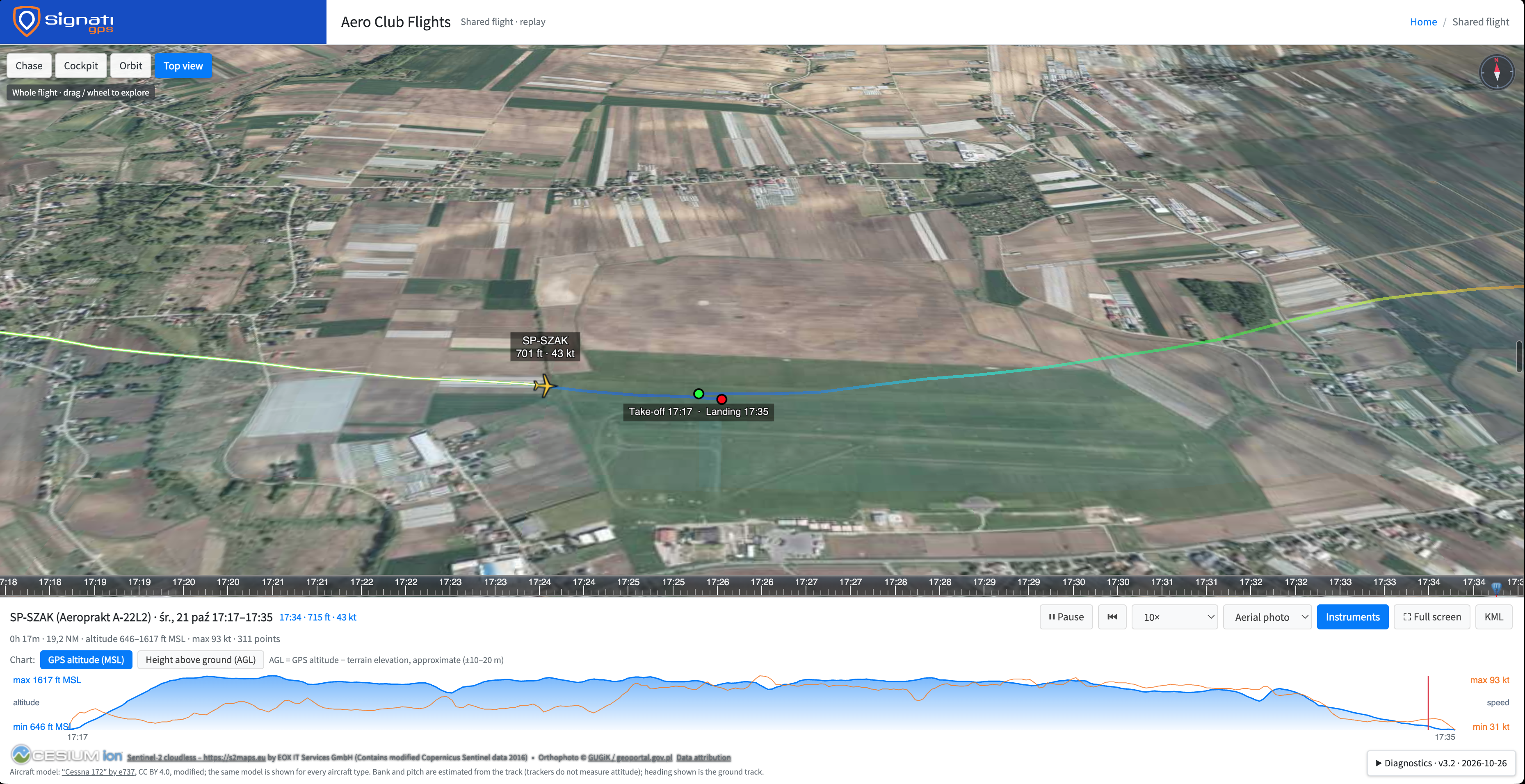
We had a working version in about two hours, then roughly one more day of real-world testing to fine-tune a few settings. What surprised me most is that the very first version actually worked. I tried to build something similar about two years ago, when AI coding tools were much simpler – I was copying and pasting code fragments to make changes. Now you can build a whole application without writing the code yourself. This is definitely the future. But it's not enough to just tell the agent what to do. You need to know exactly what you want, understand how it works, test it properly, and be able to read and change the code yourself. AI makes a good engineer much faster – it doesn't replace engineering.
Polishing things out
First version in about two hours, then a few more hours of polishing. Aliaksei wanted a dark theme, I wanted a light one – one comment. I uploaded our company logo and wrote a few lines about what I wanted changed. The 3D aircraft model used in the first version was a big twin-engine plane that looked military, not like a small Cessna. So I asked to change it to a light aircraft, because that's what our users actually fly. Done in a couple of minutes. That's magic.
Future applications for business workflow
It's not just a hobby. Sure, building it with Aliaksei was fun, but we already have trackers in the Polish aviation market – in flight schools where instructors want to see in real time where their planes are. There are apps like Flightradar, but that's a completely different world and different data. With cars on the road, a line on a map tells you almost everything – you can easily see which way the car went. In aviation, a line over the runway can mean many things. Was the plane taxiing along it? Taking off? On approach to land? Or just flying over the airfield at some altitude? On a 2D map, you simply can't tell. A 3D view shows it in a completely different way, and I believe that's going to be key for aviation – after all, we see the world in 3D ourselves. That's why this direction is so interesting to us.
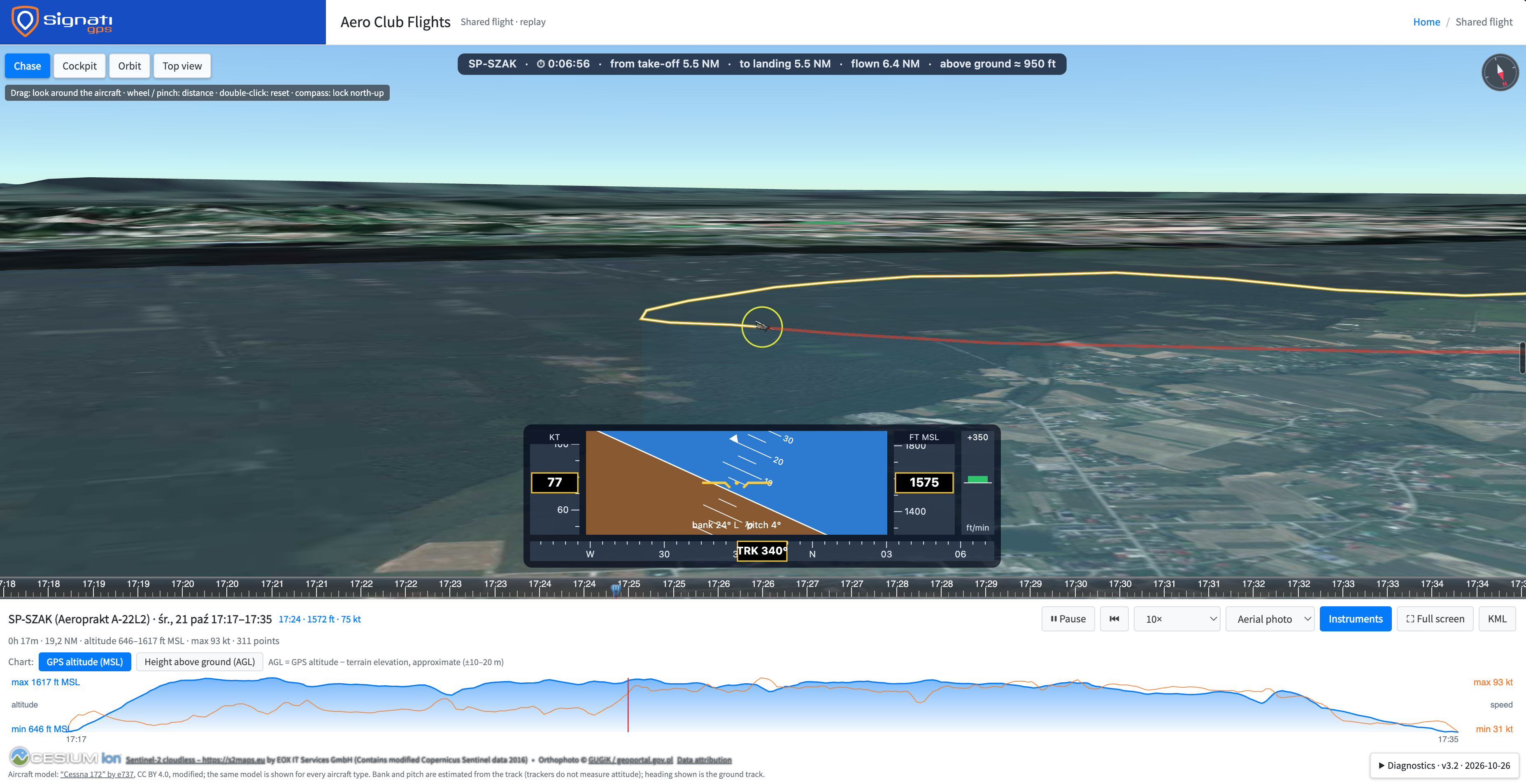
When would we roll it out? As soon as we can host the app under our own domain and use the same login as in our system, we'll give it to customers for testing and see how they like it.
Approvals and trust in agents
With any tool, after a few days or weeks you know whether you can trust it – and with flespi agents, that trust came quickly. We also have good safety nets: our code lives in a repository, so we can always roll back. When it comes to live customer data, we simply go step by step – you don't hand an agent the keys to production on day one.
Our next step is giving flespi read-only access to our API. The agent will be able to read our data and help investigate issues, with nothing at stake. Once that works well, we'll add write access and synchronize data in both directions. Right now, when we create a customer in our system, flespi only sees an ID – we push names to flespi through the API from our side. Later, it will work both ways: if we turn a device off in flespi, the agent could also deactivate its SIM card through our API. That will make day-to-day maintenance much easier.
Specialized apps for specific use cases
Our customers come from very different industries – flying clubs and flight schools, transport companies, and even a sports-car rental business. For a client like that, an agent can build a small dedicated app with live vehicle data: not just location, but how the car is actually being driven. When you rent a sports car, the temptation to push it hard is real, so the owner wants to see harsh braking, aggressive acceleration, and similar events as they happen.
And they tell me they need it live. They don't care what happened yesterday – they want to know in the middle of the night that someone is burning the tires. That's exactly the kind of app we can build in flespi: specialized for one company and one use case, and much faster with an agent than coding it ourselves.
Steps, reasoning, and pricing
Overall, it works really well, and of course it can always get better. One idea: pricing. Sometimes I don't know how much a task costs us. I know I can find it via the API or in the panel, but if it were shown right in the chat, it would be much easier – you'd immediately see what a task cost and how many credits are left.
I've been working with flespi for years, and a lot has improved over that time. We've already had the chance to meet the flespi team in person – during a conference trip to Vilnius and as guests in their office – and I hope next year we'll have another opportunity to meet and exchange ideas. As we keep growing, our needs keep changing too, so it's good to know that both our companies are moving forward and building what we and our customers really need.
Looking forward
I think AI agents are a big deal. A few years ago, it was hard for non-technical people to build an application. Now we can turn new ideas into working solutions very quickly. API integration is a great example: you don't have to read the manuals yourself. Documentation from telecom vendors is exactly the kind of structured data AI reads perfectly, so the integration gets done much faster.
Another big thing is the language barrier – AI agents practically remove it. I can write in Polish or in English, someone else writes in their own language, and the agent understands everyone. We don't need to translate every text into English to communicate between the flespi team and ours. It makes communication easier on all sides, and it also lets people from other countries, who speak other languages fluently every day, get into support and day-to-day work much faster.
Of course, our competitors have access to AI too – everyone does. So the real advantage is speed and know-how: knowing your domain, your devices and your customers. Anyone can quickly build something that looks fine, but deep technical knowledge is what makes it work long-term. Someone still has to maintain the application, and if one part of your business was built by the flespi agent and another by ChatGPT, you need to know how it all fits together.
That's why documentation matters so much to us – something new people joining the company can read to understand how the application works under the hood, not just how nice the front end looks.
A piece of advice
It's hard to tell other companies what to do, but I see two things. First: automate what you still do by hand – with flespi agents it's simply faster. Second: if you have an idea, ask the agent to build it. Even if it never goes to production, you have a demo to show a customer. They say “I like it” or “I don't”, and then you decide whether to build the real thing from scratch or hand it over to the agents.
Sometimes I have an idea in the evening, pass it to the agents, go to sleep – and in the morning there's a working application.
One personal rule: before I ask AI to solve a problem, I try to work out the solution myself first, and only then ask how it would approach it. Once you've seen the AI's answer, it's hard to unsee it. So I think through how the application should work, then ask the agent to build it – or ask how it would start. I find that really interesting, and I think Aliaksei has a similar engineering approach.
I've always liked new technology. I've been driving electric cars for three years. When I bought the first one, everybody told me it would catch fire in the middle of the street, or that I'd never make it to the seaside. So I took my family on a trip to Switzerland and France – about 5,500 km in 10 days. A tough test, but I wanted to really understand the technology. That's how I approach anything new: I don't say it's good or bad in advance – I try it myself and form my own opinion.
And one more thing: flespi isn't just the agents – it's the whole team behind them. We know most of them personally, which makes communication so much easier. To us, they feel almost like colleagues working in another office, not a faceless corporation from the other side of the world.
So I really like new ideas, and it's great that flespi is growing so fast and keeps bringing in new technology. Somebody has to go one step further.”