This summer, Europe has been suffering from heat waves week after week, breaking temperature records set over the last century. The electrical grid is operating at its limits, with periodic failures in one country or another, but somehow we keep moving through this. The question I often ask myself is how Europe will stay competitive in the AI revolution when it simply does not have enough power generation or grid capacity to support new datacenters. And fixing this will take at least another 5-10 years…
Meanwhile, in June 2026, flespi monthly uptime was 100% with uninterruptible power supply.
Due to the lazy summer period, we decided to postpone the deprecated POST devices/containers/logs calculate API removal (superseded by the GET methods) for one more month – until August 3. We sent a personal notification via flespi chat to all root flespi account holders who are still using the deprecated API to help them avoid any service disruption.
Among the interesting things we released in June are the following:
The tachograph functionality support in Assistant Telematics devices.
We added the possibility to download device-specific log files usually requested by manufacturers to debug firmware issues.
And we published a couple of articles:
Overview of AI in telematics devices, written in cooperation with the most popular manufacturers.
A story about flespi – a bit of its history and where we're heading, told from my perspective.
And one more thing I want to share today. Usually, I don't write about the numerous protocol updates we implement – there's no point; it's routine work for us. However, I do want to highlight one important fact: since we introduced a new team member – Birdy (our AI protocol engineer) – we've doubled the throughput of our protocol-related work:
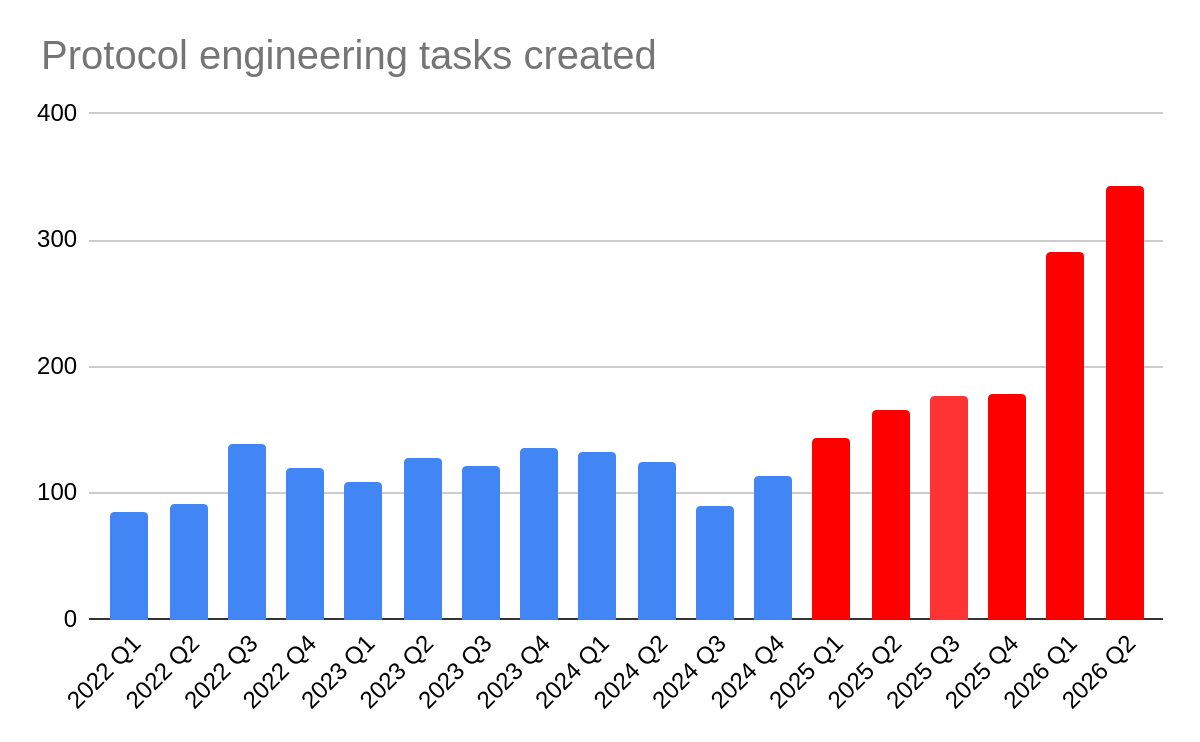
And to be honest, we can now double it again and again, delivering as many protocol updates as there is demand for. We're now limited only by AI token costs, not by the availability of human engineers anymore. Meanwhile, our human engineers can focus on more complex engineering tasks – spending more time on backend architecture and less on routine protocol maintenance.
Stay tuned!