AI is no longer a future trend in telematics – it is already finding its way into tracking devices, dashcams, and video telematics platforms across the industry. As more manufacturers invest in onboard intelligence, their latest products offer a glimpse into where hardware development is heading next. In this overview, we'll take a look at how some of the most popular telematics vendors are implementing AI today and highlight the devices and solutions that showcase these capabilities in practice.
Jimi IoT
AI has become an increasingly important direction both for products and internally at Jimi IoT. From a product perspective, AI has actually been part of their DVR product line for quite some time already. Since around 2020, many video telematics devices have incorporated edge AI capabilities directly on the hardware side. At the moment, models such as the JC371 and several other DVR products in their lineup already support AI-driven features, including ADAS, DMS, Facial recognition, Seatbelt detection, and Driver behavior and safety analysis
Among them, the JC371 is probably the best representative of the current AI direction, as it contains one of the richest sets of algorithms in its portfolio today.
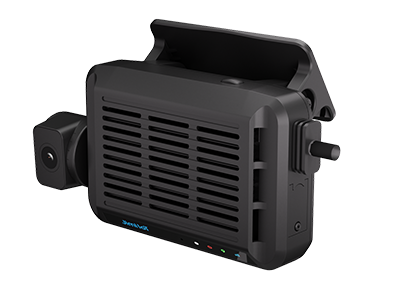
The JC371 demonstrates how AI is moving from cloud-based analytics into the tracker itself. Equipped with an onboard neural processing unit, the device continuously analyzes video streams in real time and transforms them into actionable telematics events without relying on external servers. Its AI-powered DMS can detect fatigue, distraction, phone usage, smoking, seat belt violations, and other risky behaviors, while ADAS algorithms monitor the road ahead for potential collisions, unsafe following distance, and lane departures.
Instead of functioning as a passive dashcam, the JC371 acts as an intelligent edge-computing platform that can warn drivers instantly, generate structured safety events, and provide fleet managers with valuable insights into both driver behavior and road conditions.
What AI adds beyond traditional telematics is that the terminal is no longer just a data collection endpoint. Traditionally, telematics focused more on management: tracking, operations, routing, compliance, etc. With AI, the focus expands strongly into proactive safety and protection.
Whether it's driving safety, fatigue detection, distraction warnings, or protecting drivers themselves, AI allows the device to interpret situations rather than simply record them actively. The truly game-changing aspect is this shift from management to real-time intelligent intervention and safety enhancement. Looking ahead, the direction of DVR and video telematics will continue evolving toward more fleet-oriented AI capabilities. The company is actively exploring and planning more advanced AI capabilities that can further enhance fleet safety, operational efficiency, and intelligent event analysis.
TOPFLYtech
AI direction is currently in the planning and development stage. One important area the manufacturer is working on is AI dashcam technology, which is expected to focus on driver and road monitoring scenarios. The planned functions may include driver behavior monitoring, distraction or fatigue-related alerts, road event detection, and video-based evidence for fleet safety management. Compared with traditional GPS telematics, this would help fleet operators better understand not only where a vehicle is, but also what is happening around the vehicle and with the driver.
In addition to AI dashcam applications, the company is also planning to introduce AI products for cargo management in the second half of the year. This direction is especially relevant for logistics, cold chain, high-value cargo, and transportation security scenarios. The goal is to help customers manage cargo more intelligently, for example, by improving visibility into cargo status, identifying abnormal situations, and supporting better evidence-based cargo supervision during transportation.
From their point of view, the truly game-changing value of AI in telematics is the transition from passive tracking to proactive risk identification and operational insight. Traditional GPS devices are very effective in answering questions such as “Where is the vehicle?” and “What route did it take?” AI can add another layer by helping answer questions such as “Is there a safety risk of the cargo?”, “Is the driver behaving abnormally?”, “Is the cargo condition unusual?”
Unlike some video telematics vendors that center their AI strategy around a flagship device, TOPFLYtech positions artificial intelligence as part of a broader Driver Behavior Monitoring solution. By combining GPS tracking, video telematics, and onboard ADAS and DMS analytics, the system can detect driver fatigue, distraction, unsafe following distance, lane departures, and other high-risk behaviors in real time. AI transforms video streams into actionable safety events and behavioral insights, enabling fleet operators to coach drivers, investigate incidents, and proactively reduce risk.
"We believe this approach allows us to support both traditional tracking applications and future AI-based use cases in fleet safety, driver monitoring, cargo management, and asset protection."
Meitrack
Meitrack's AI strategy spans several products, including the MD300 and MD300A AI dashcams, the MD500S and MD600 mobile DVRs, and other video telematics solutions designed to combine vehicle tracking with intelligent safety monitoring. At the core of this approach are ADAS and DMS technologies, which use onboard AI to analyze both the driving environment and driver behavior, helping fleets identify risks before they lead to incidents.
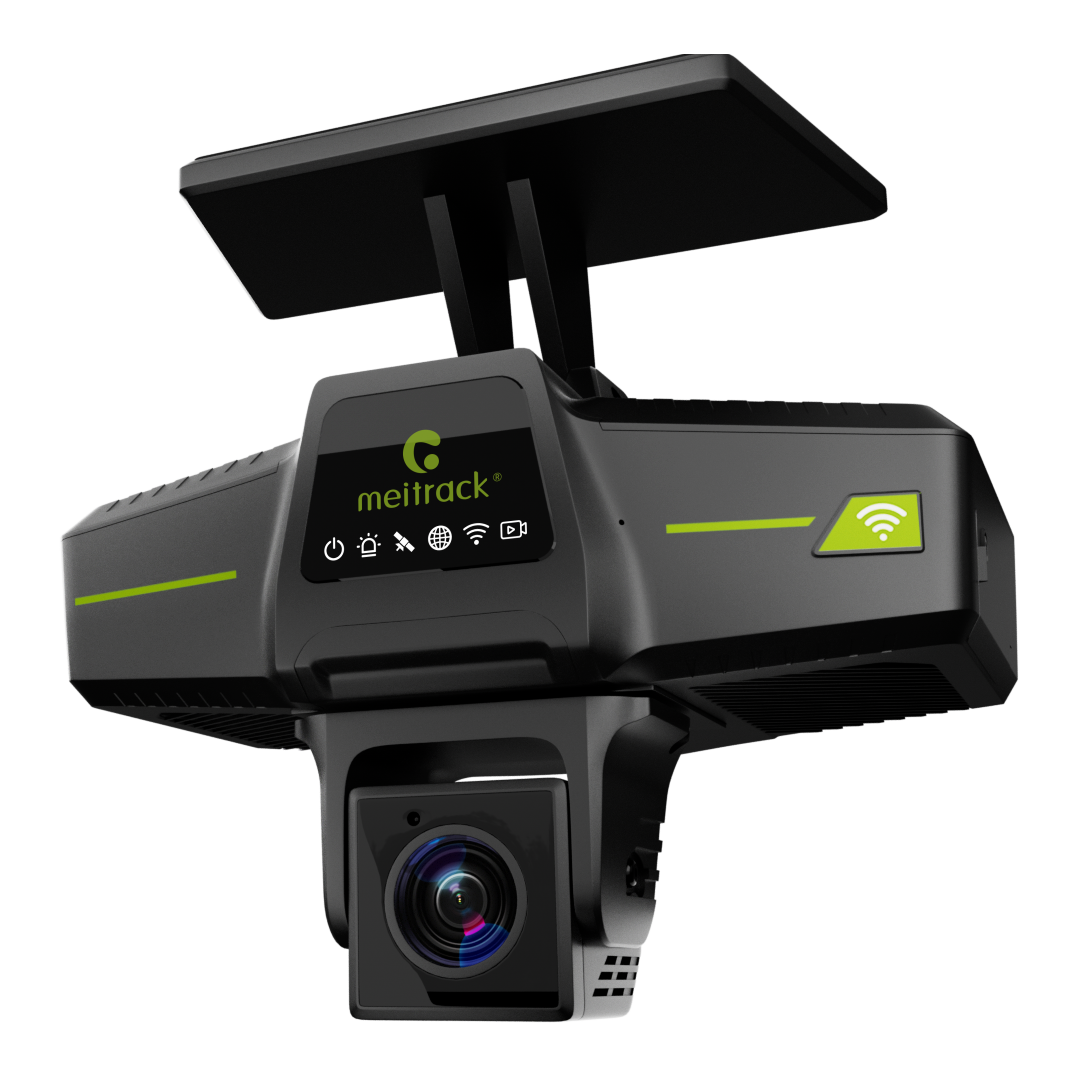
One of the company's flagship implementations is the MD300 AI Dashcam. Designed for fleet operators seeking a balance between advanced video telematics and ease of deployment, the device combines high-resolution video recording, real-time connectivity, and AI-powered driver assistance in a compact form factor. With optional ADAS and DMS capabilities, the MD300 can provide early warnings for fatigue, distraction, and other unsafe driving behaviors while continuously monitoring road conditions. Combined with 4G connectivity, built-in Wi-Fi, precise positioning technologies, and large onboard storage capacity, the device delivers both real-time visibility and reliable evidence collection. The result is a practical example of how AI is being integrated into everyday fleet operations, transforming a traditional dashcam into an intelligent safety and operational management tool.
Queclink
For Queclink, AI is becoming an integral part of video telematics rather than a standalone feature. Today, AI capabilities are available across most of the company's video telematics portfolio, with the CV200 and CV5000 representing two of its flagship market offerings. According to Queclink, the goal is to combine traditional telematics with real-time intelligence that can provide smarter safety assistance, improve operational efficiency, and reduce fleet costs. Looking ahead, the company sees AI as a key driver of innovation and plans to continue expanding its portfolio with increasingly intelligent technologies that help customers move toward a new era of connected fleet management.
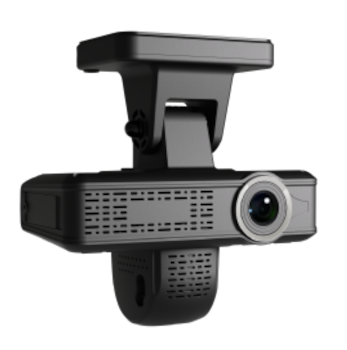
Among these solutions, the CV5000 stands out as Queclink's most advanced AI-powered video telematics platform. While the CV200 supports ADAS and DMS functionality, the CV5000 extends these capabilities with Blind Spot Detection (BSD) and Traffic Sign Recognition (TSR is available for specific markets), enabling a more comprehensive understanding of both driver behavior and the surrounding road environment. By combining multi-channel video monitoring with onboard AI analytics, the system can deliver real-time voice alerts, detect fatigue and distraction, identify potential road hazards, and generate actionable safety events. Together with live video streaming, event-based recording, and seamless telematics integration, the CV5000 demonstrates how AI is transforming connected vehicle hardware from passive monitoring tools into intelligent edge-computing platforms focused on safety, efficiency, and operational performance.
Howen
As a special player in today's list, Howen, who focuses on only video products, has already treated AI as a core and organic part of their video product portfolio. Almost all main product models, including MDVRs, Dashcams, and MDTs (Mobile Data Terminals), support AI-powered applications for fleet safety and operational management. Most AI capabilities are implemented directly on Howen's main devices through built-in edge computing via CPU or NPU modules, offering an all-in-one and available solution.
What functions does it perform? Their amount is crazy:
DMS: Face Recognition, Driver Leave / Change / Return Detection, Eye Closure Detection, Distraction Detection, Yawning Detection, Smoking Detection, Phone Usage Detection, IR-Block Glasses Warning, DMS Camera Cover Detection, Seatbelt Unfastened Detection, Co-driver detection.
ADAS: FCW (Forward Collision Warning), HMW (Headway Monitoring Warning), LDW (Lane Departure Warning), PCW (Pedestrian Collision Warning), and TSR (Traffic Sign Recognition: Stop sign recognition, Speed limit recognition, etc.)
Additional AI Applications include BSD (Blind Spot Detection), Passenger Counting, Hands-off Detection, ANPR (Automatic Number Plate Recognition), Video Blurring (for privacy policy in Europe), and other scenario-specific AI applications.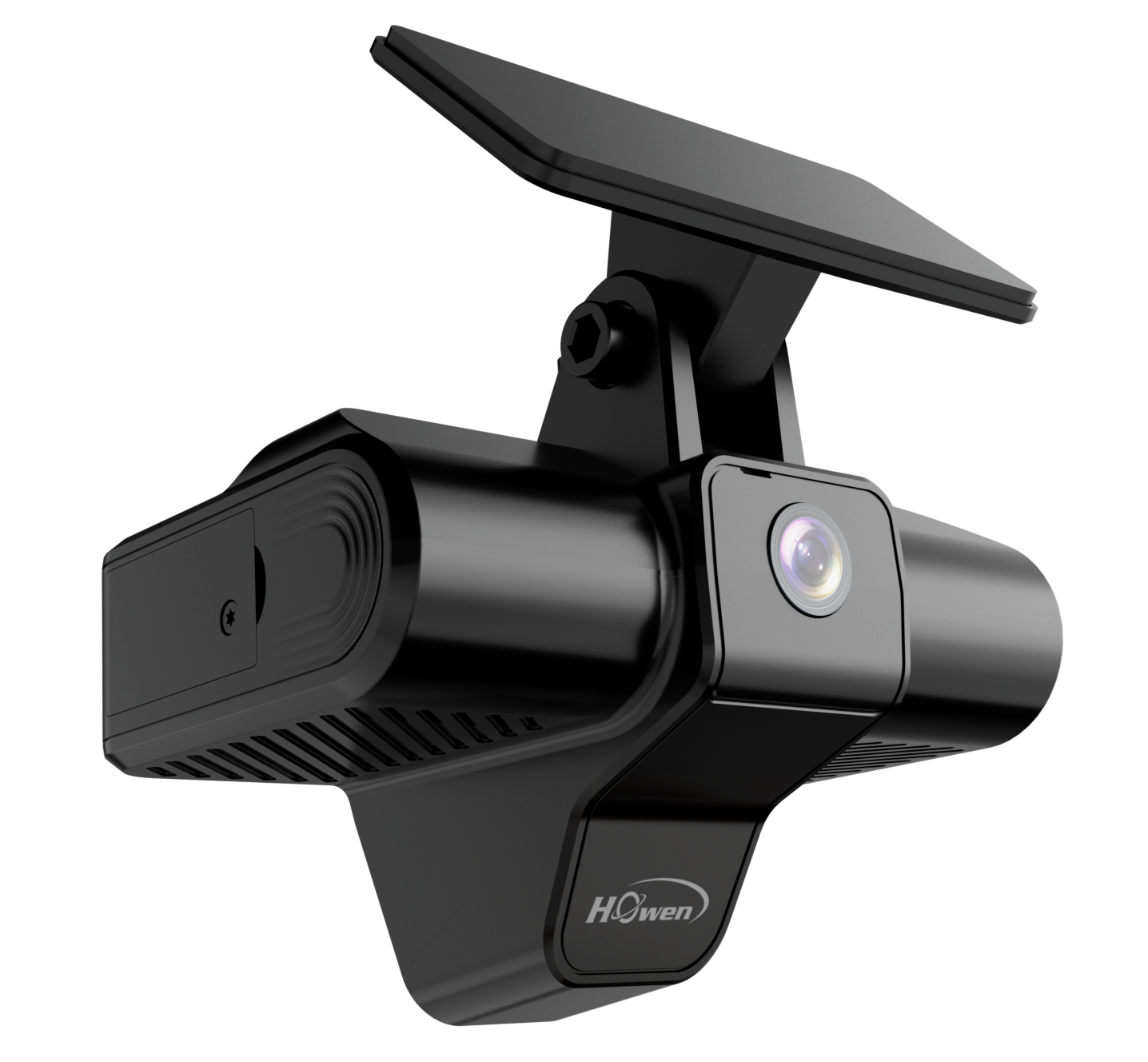
The Howen Hero-ME40-02 series highlights the growing role of AI Dashcam in modern video telematics, with a video input range of 2-6 channels (2 channels 1080p + 1/2/3/4 channels external 1080p), combining high-definition video surveillance with advanced onboard analytics in a compact edge-computing hardware. Designed for commercial fleet operations, the device supports AI-powered features including FR+DMS+ADAS+HOD+BSD+TSR, with reliable video and tracking technologies.
Of course, other examples like the multi-channel (up to 12 or 16 channels) MDVR, Hero-ME31-08, or compact & cost-efficient dashcam Hero-MC30-01 and Hero-MC30-02 are offering full options for diversified levels of niche markets.
From Howen's perspective, the real game changer with AI is the combination of reliable video technology and AI analysis. AI can identify a risky event, but video provides the context needed to understand and verify what happened. The combination of real-time video, historical video evidence, and AI-generated alerts enables fleet operators to make more predictive, faster, and more informed decisions. Previous video evidence provides an after-event record, whereas video AI provides proactive info. This approach allows fleet operators to move beyond traditional video recording and leverage AI-driven insights to improve driver behavior, enhance road safety, and gain greater operational visibility.
Talking about AI strategy evolving at the moment, the manufacturer believes video is the fuel. Video remains the foundation of Howen's solutions. The company continues to invest in video transmission efficiency, playback experience, storage reliability, and overall system stability to ensure customers can access critical video data whenever needed and to guarantee the performance of the AI algorithm.
And AI is the engine. It makes the video more actionable by automatically detecting safety-related events and highlighting relevant footage. AI is evolving so fast (AI models are changing dramatically), and there is a lot of potential to improve, including the logic of combining different AI events as indices.
Howen continues to support open integration through APIs and communication protocols, allowing partners to integrate both video and AI data into their own platforms. Moreover, platform AI can act as a supplement to edge AI. Edge AI is instant, but sometimes limited by computing capability. Platform is the opposite.
Looking ahead, the manufacturer expects AI video telematics to become increasingly intelligent, with multiple AI applications working together. Their focus will remain on edge AI innovation, open integration, and helping partners deliver more value to their customers.
"We see Howen's role as a technology partner within the telematics ecosystem. So we'll keep (and will invest more) in improving AI performance and releasing new capabilities on the device side."