We continue our series of posts highlighting some of the most valuable and sophisticated projects built with flespi worldwide.
Gurtam has long been a sponsor of the Dakar Rally – but this time, instead of racing through deserts, we’re heading to India for a very different kind of journey: a wildlife safari.
Highlights
Zipr Links Pvt. Ltd. is described as "India's best smart tourism and visitor management technology company". It focused on digitizing high-footfall destinations, including wildlife reserves, zoos, museums, heritage sites, temples, theme/adventure parks, and public attractions. They position themselves as a deep-tech operational platform that combines ticketing, visitor flow management, validation, analytics, and field operations into a single ecosystem.
In the wildlife segment, their focus extends beyond booking into safety, movement visibility, route discipline, and control-room intelligence. Zipr works closely with public-sector and destination operators to modernize on-ground operations with scalable, reliable, and locally adaptable digital infrastructure. Their market positioning is built around operational control, governance, and field-ready integrations for complex tourism environments.
Challenges
For wildlife safari operations, the team needed a GPS telematics layer to provide real-time vehicle visibility within our broader visitor management platform. The roadmap included live tracking of safari vehicles, route compliance monitoring, halt detection, historical trip playback, and alert-based operational oversight. They chose flespi because they needed a platform that could simplify device connectivity and provide a normalized telemetry stream without forcing us to build hardware-level integrations from scratch for each tracker or protocol.
“The critical factors for us were API reliability, clean, structured data access, scalability, low integration friction, and the ability to plug live GPS data into our dashboards and workflows. We were looking for a backbone that could handle the telematics complexity while allowing Zipr to stay focused on the business and operational layer.”
Solution
The most valuable aspect of using flespi was that it provided them with a dependable telematics foundation that they could integrate into a domain-specific wildlife operations solution. Instead of investing major effort in low-level protocol handling, their team was able to focus on building a clean, user-friendly dashboard layer for safari monitoring and control. The integration can be described as moderate on the technical side but highly impactful operationally, because flespi handled the telemetry backbone. At the same time, Zipr built the application experience, intelligence layer, and monitoring workflows on top of it.
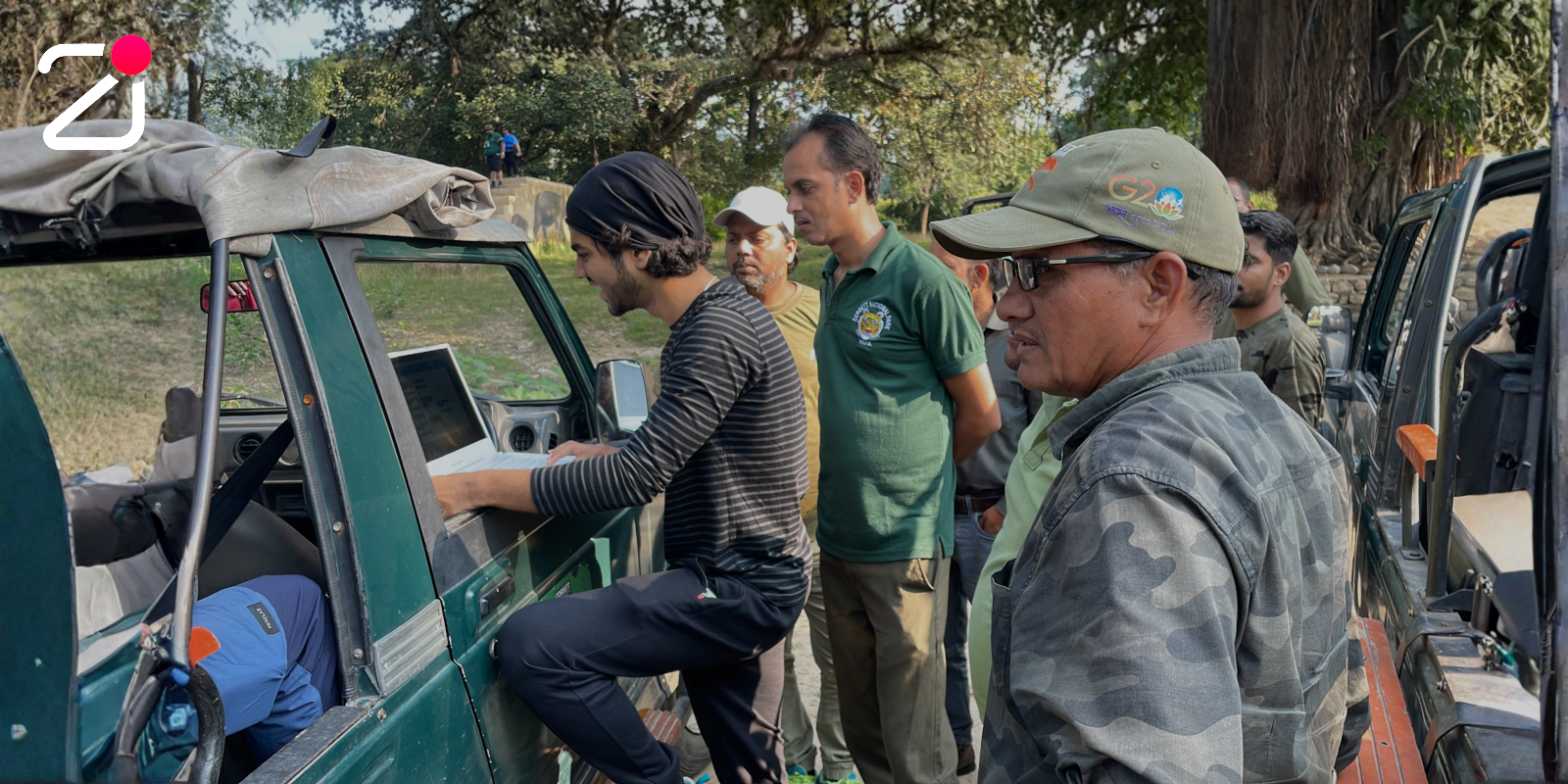
The implementation followed a structured process. First, GPS devices installed in safari vehicles were connected through flespi-supported channels. Second, the incoming telemetry was normalized and exposed through APIs and streaming interfaces. Third, Zipr consumed this data and mapped it to safari-specific operational entities such as trips, routes, halts, reserve zones, and exception conditions.
Beyond vehicle movement alone, Zipr mapped every layer of this telemetry with visitor data and journey information, connecting the full user lifecycle from booking, allocation, arrival, safari movement, visit completion, and exit. This created a much richer operational view, allowing authorities to understand not only where a safari vehicle was but also which visitors were associated with it, which route they were on, what stage of the journey they were in, and how the overall experience was progressing.
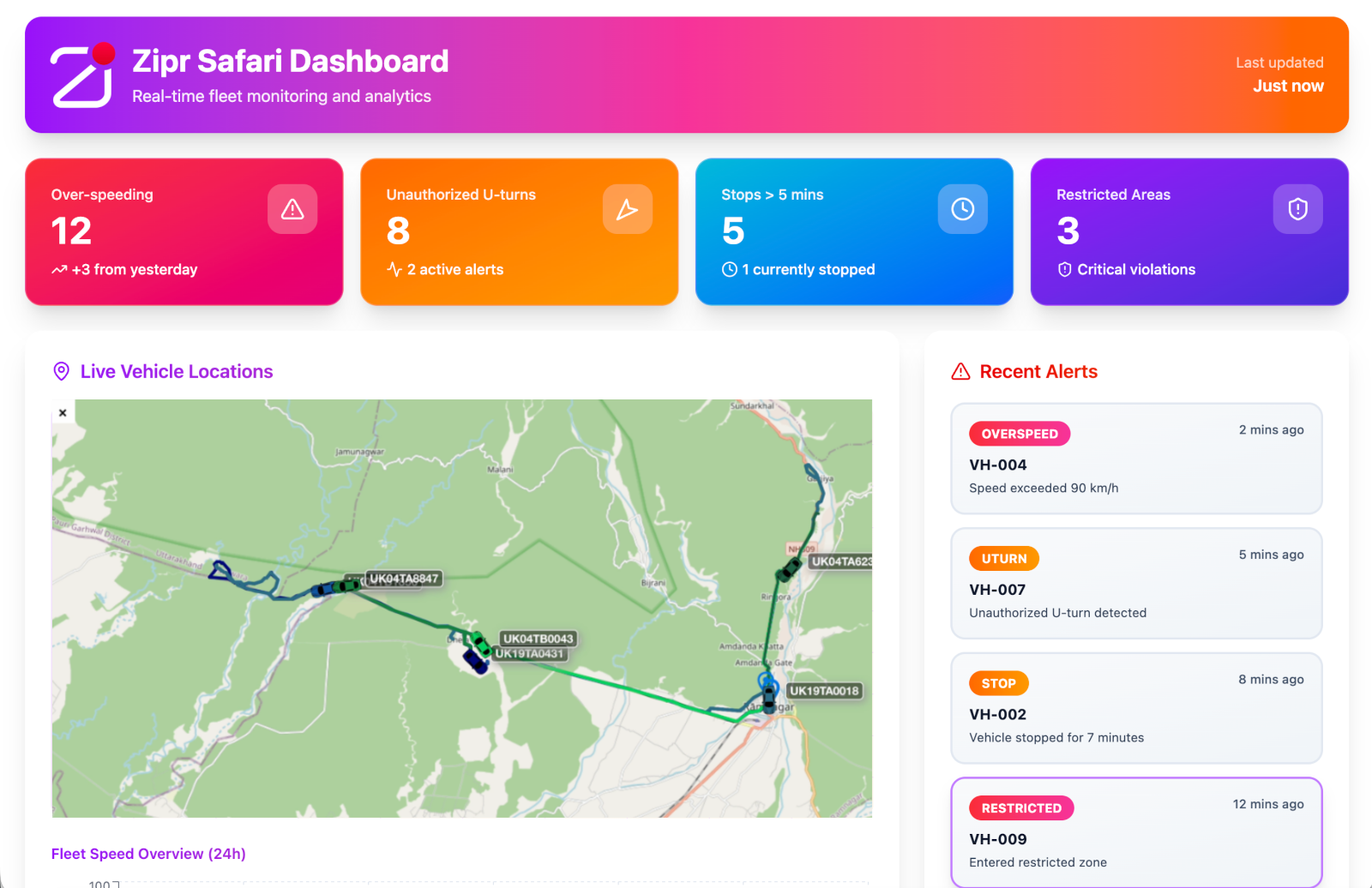
The team then used the data taken from flespi to create dashboards that made the information easier to understand, cleaner to interpret, and more user-friendly for operators. This was an important part of the solution because raw location data alone is difficult for operational teams to use effectively without a proper interface. They added monitoring views, trip playback, route-deviation visibility, halt analysis, and alert mechanisms for abnormal movement or offline devices.
What made the solution effective was not just live tracking, but the transformation of GPS telemetry into complete operational intelligence tied to both vehicle activity and visitor journey data. Especially important features included normalized telemetry, real-time data access, historical visibility, and flexible integration capabilities. The final result was a safari operations dashboard that provided wildlife authorities with better clarity, improved monitoring, and a far more practical way to manage the full journey from booking to visit completion.

Business Development Manager
“Overall, the experience has been positive, and the platform has been valuable for our use case. They only one issue we observed is that unidentified devices that do not get auto-created may lose data after manual channel allocation, identification, or device update. Resolving this would improve reliability further.”
And our codi got commented on this for clarity: "This is expected behavior, not a bug. Channels store data temporarily (24 hours by default), while devices provide long-term storage. If a device entity isn't created before that window closes, the data is lost. The solution is simple: set up an auto-creation webhook so devices are provisioned the moment they first connect. It's a learning curve issue, not a reliability one."