The Wialon Local connector gives your flespi AI agent access to a Wialon Local installation, the Wialon server you run yourself: Wialon documentation and API expertise plus direct work with its data on your behalf. Use it to manage a Wialon Local installation paired with flespi, on its own without any flespi pairing, or side by side with a Wialon Hosting account.
New to flespi AI agents? Read the flespi AI agents article first: what agents are, how they reason and sleep, and how approvals keep you in control. This article covers the Wialon Local side of the story.
1. Connect the installation
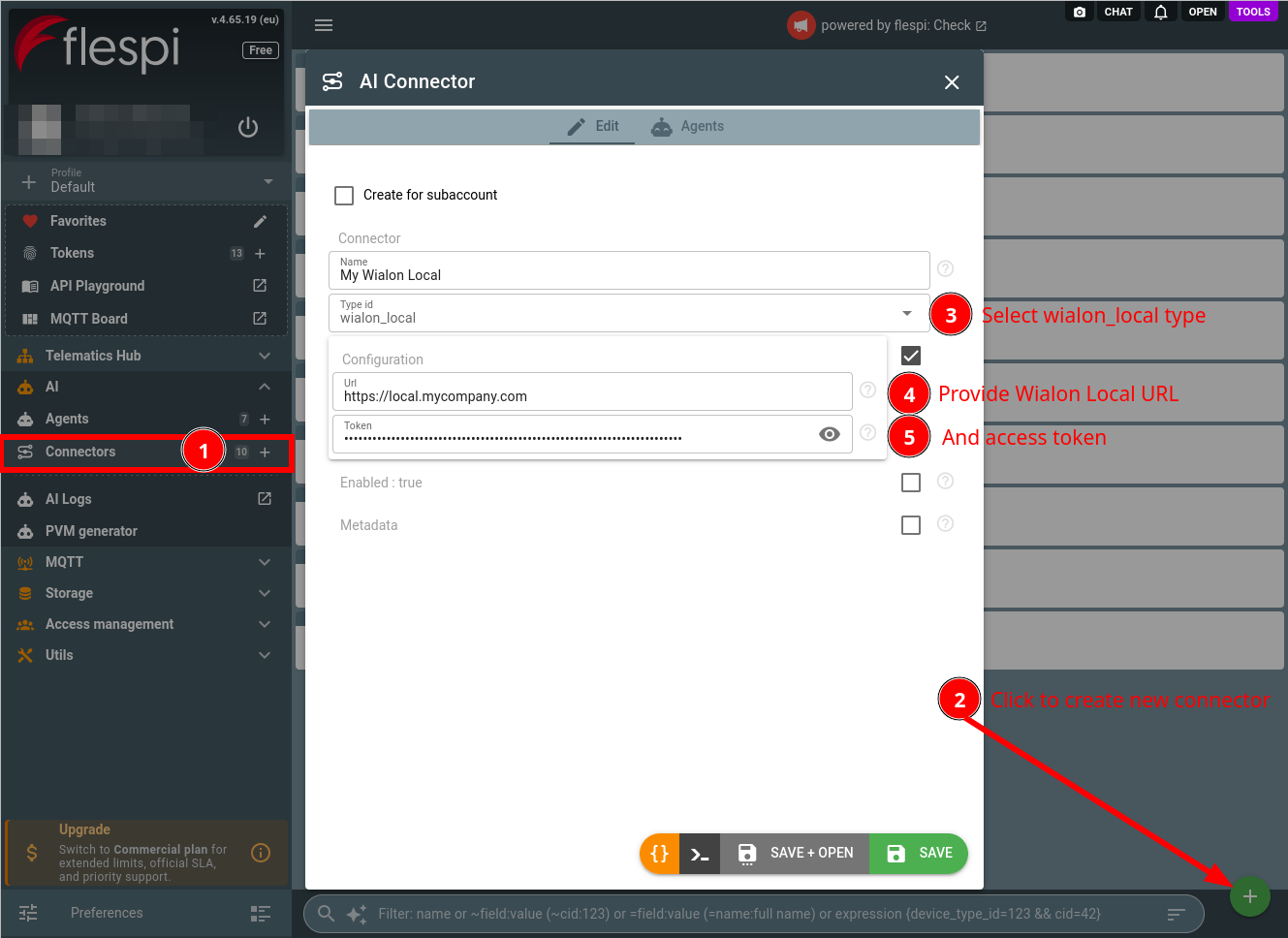
Two configuration fields:
- site address — the address of your Wialon Local monitoring or CMS Manager site, e.g.
https://wialon.example.com, without a path or a trailing slash. The site must be reachable from the internet over https with a valid certificate: the agent never sends your token over a plain connection. Wialon Local 2604 or newer is supported. An older release is refused with a message naming the release required, so upgrading the installation is the way to connect it. - token — a Wialon access token issued by your own site. Open
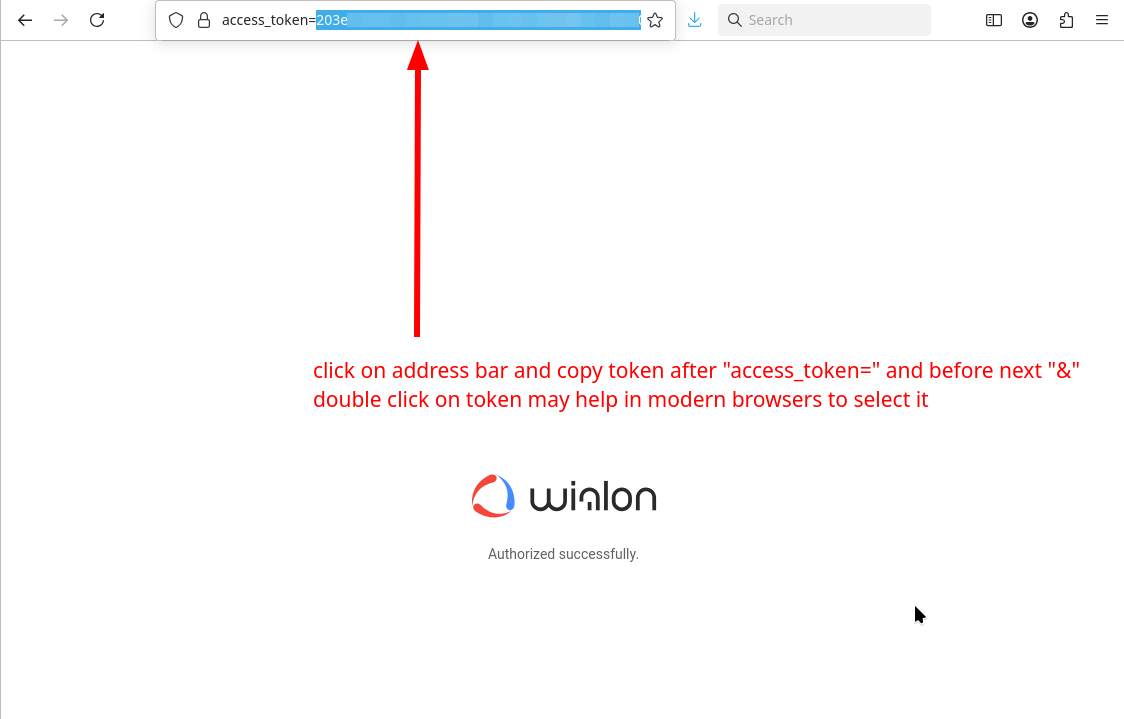
https://<your site>/login.html?client_id=flespi&access_type=-1&activation_time=0&duration=0&lang=en&flags=0, sign in with your Wialon user and confirm the access request. The site then redirects to an address carryingaccess_token=, and the 72-character value after it is your token. The link asks for full access (access_type=-1) and no expiry (duration=0).
Copy the token from the address bar of the page you land on:
Create a connector of the wialon_local type with the site address and the token:
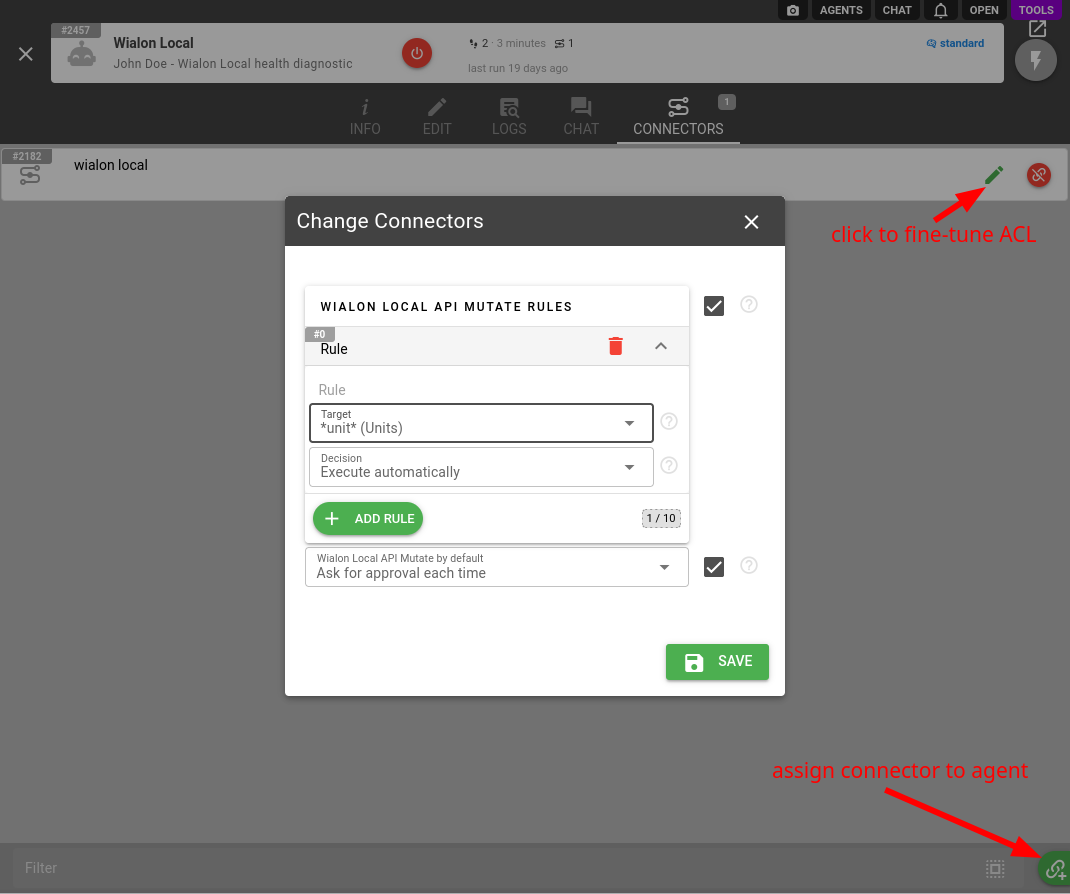
Assign the connector to your agent (create one if you have none yet), choosing what the agent may change on its own: the default rule for account-changing Wialon API calls and, above it, rules for the parts of the account you trust it with. The targets are the families of the Wialon API: units and their commands, geofences, drivers and trailers, notifications and jobs, report templates, users and tokens, account and billing, and the rest such as files, routes, orders and messages:
The token defines the ceiling: the agent works strictly within the token's access scope and recommends a broader token when a task is out of reach, rather than attempting calls that will fail. An expired or revoked token surfaces to the agent immediately — it will ask you to reconnect the connector with a fresh one. A token of the server-level user reaches every account on the installation, and Wialon places new items in accounts below it, so the agent asks which account an item belongs in before creating it.
2. Work with the agent
The agent knows Wialon: it consults the official Wialon Local documentation and API reference on its own, for the release your installation runs, so you can discuss units, resources, users, geofences, sensors, notifications, and reports the way you would with a Wialon engineer. It also knows what is specific to your server: the installed release, the address devices connect to, and the modules your installation grants, so it works with what the installation has rather than assuming the Wialon Hosting feature set.
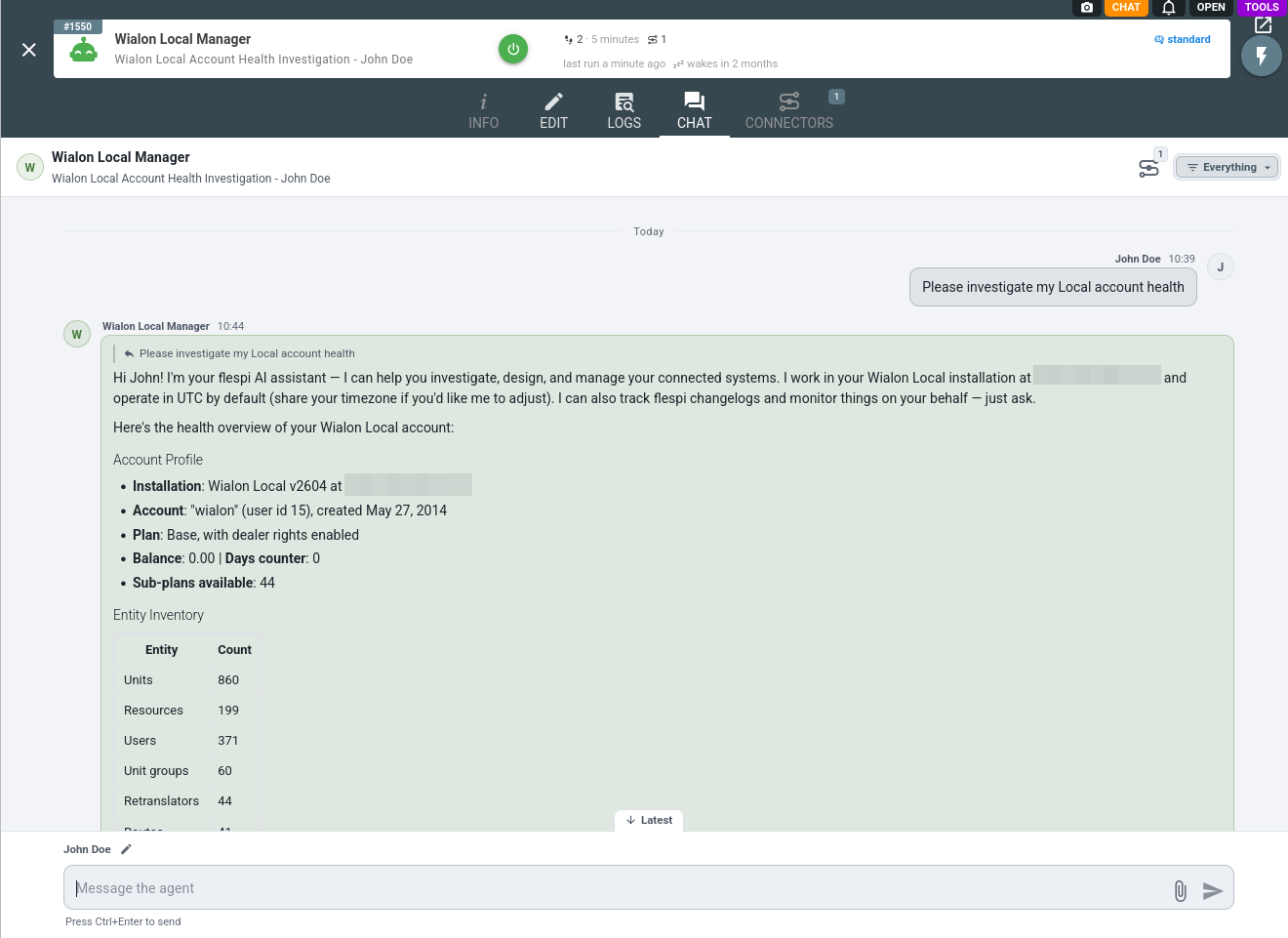
Reading the installation is free and autonomous: the agent searches items, loads messages, executes and reads reports, and analyzes the results computationally — all through a read-only surface that physically cannot change anything.
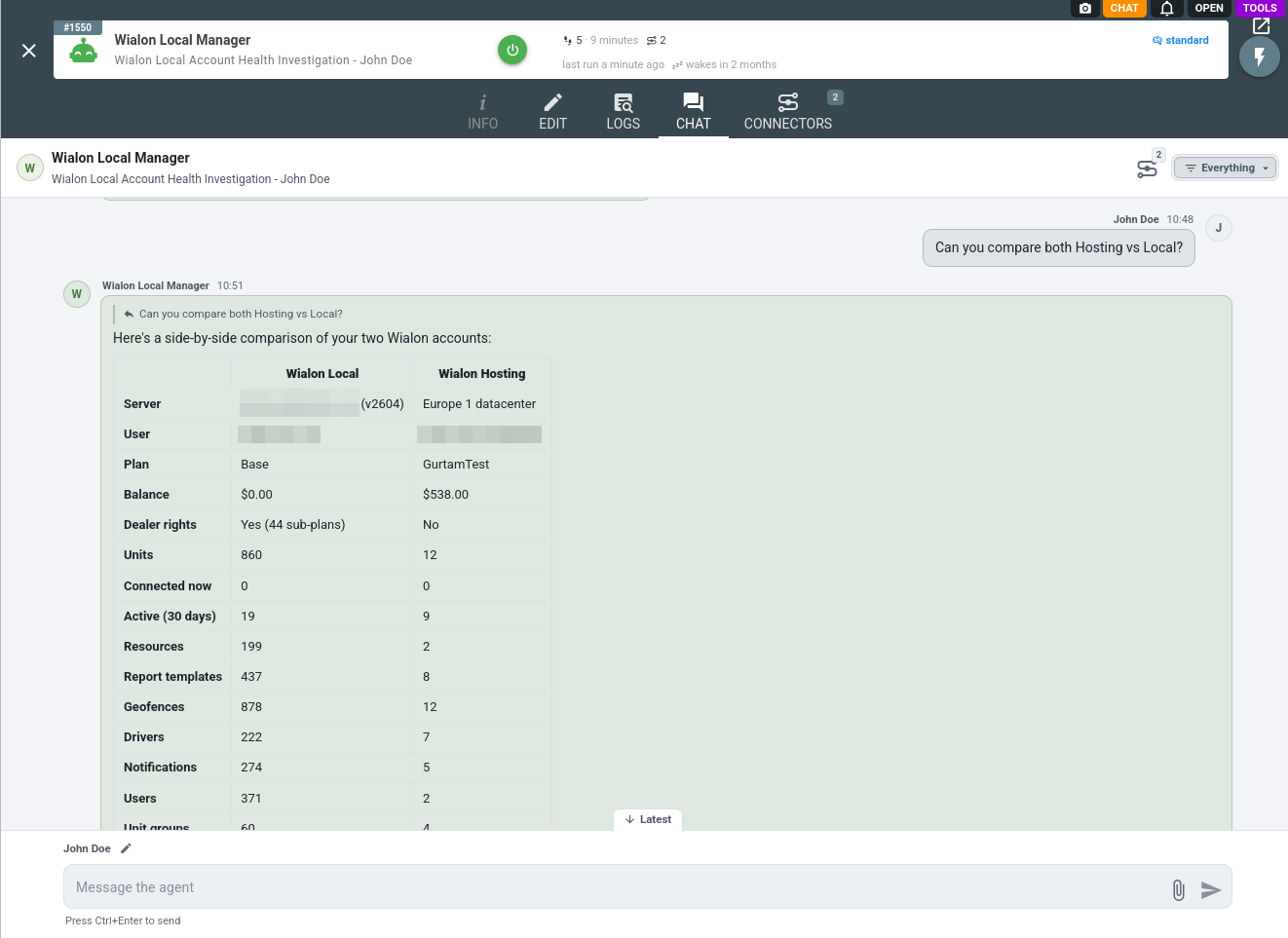
When the installation is paired with flespi, the agent reasons across both systems: for example, it checks how flespi data lands in Wialon. With a Wialon Hosting connector assigned to the same agent, it reasons across the two Wialon systems too, keeping them apart: a migration from Wialon Hosting to your own server starts with the agent comparing the units by unique ID and looking up every hardware type on the installation itself, and the plan is yours to approve before anything is created: The connected installation's data stays between you and the agent: it never leaks into other accounts or shared knowledge. Nothing on the Wialon side wakes the agent — for a monitoring task it checks the installation on its own schedule.
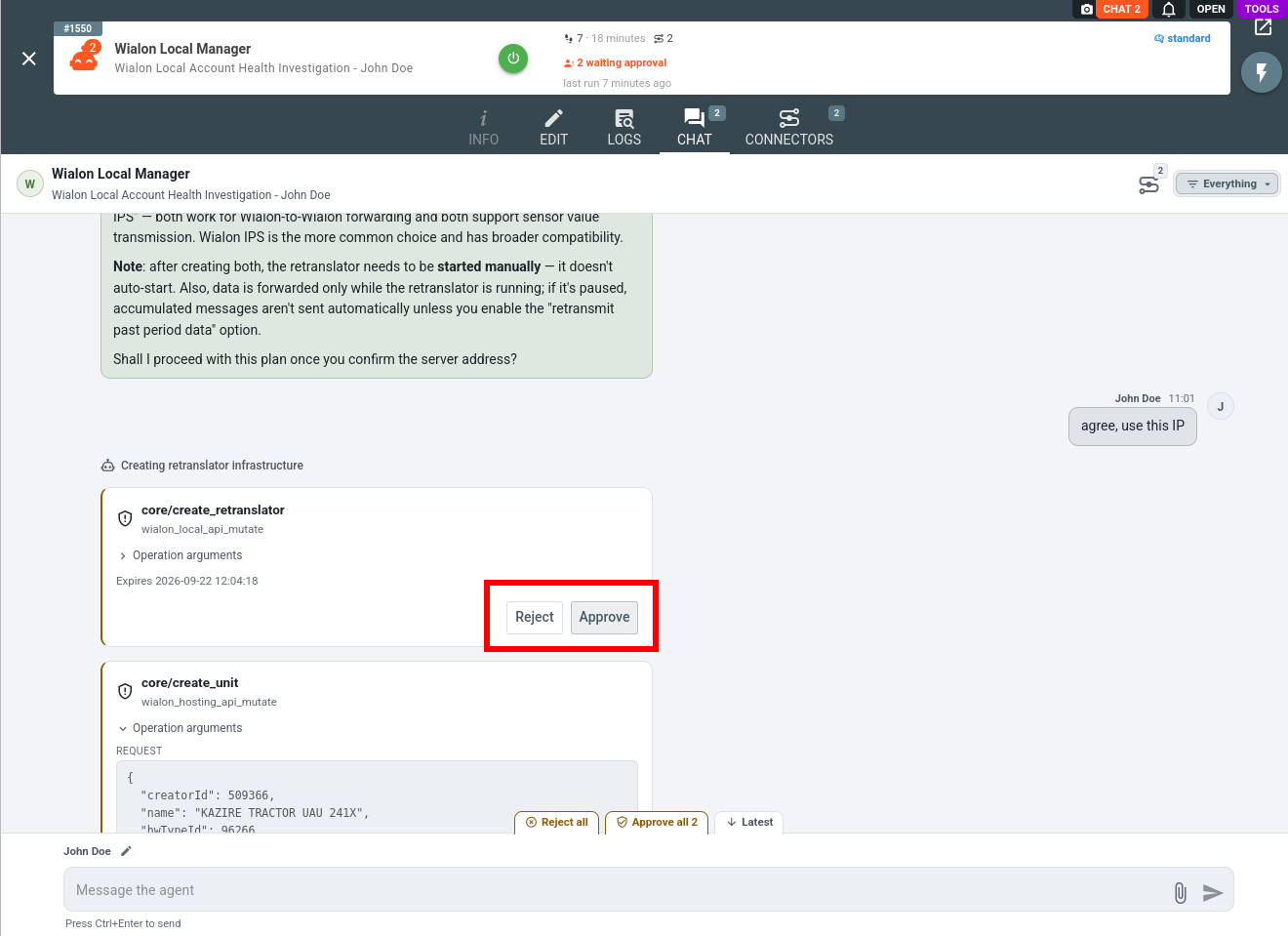
Every account-changing Wialon API call goes through the agent approval rules as the wialon_local_api_mutate operation type, and by default each call becomes an approval request — you review the exact call and its parameters before approving, one request per call whichever system it targets:
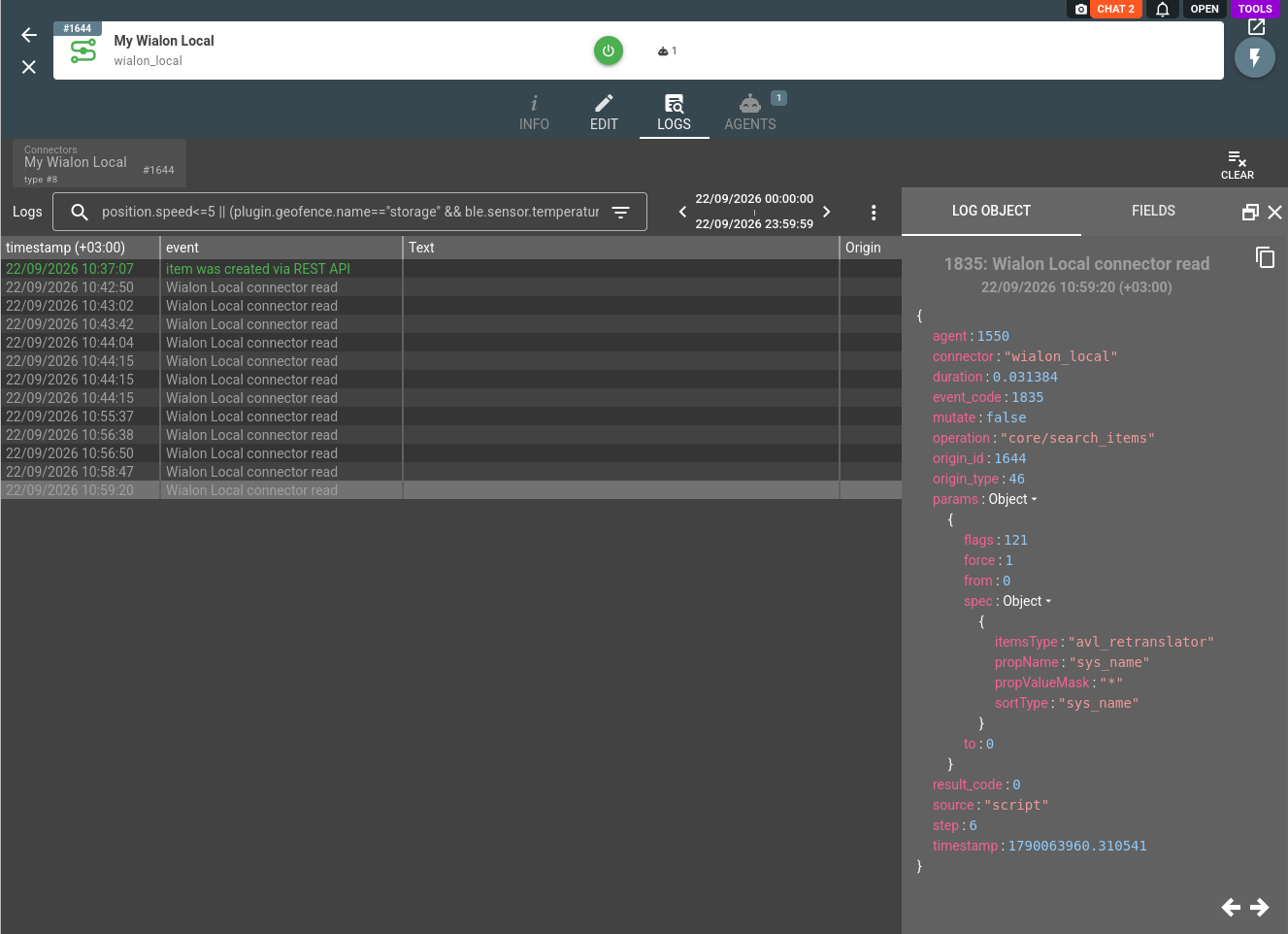
Mind what the default protects before relaxing it: the mutation surface includes commands to physical devices, token operations, and account and billing changes. Rather than switching the whole operation to automatic execution, add a rule for the part you delegate, for example units on automatic execution while everything else still asks. Executed mutations land in the agent conversation history as wialon_local_api_mutate_executed records, and every Wialon API call the agent performs, reads included, is recorded in the connector logs with the operation, target, and result:
To put the agent in front of the people you serve rather than yourself, pair the connector with a persona: the agent takes your name, speaks their vocabulary, and under branded disclosure never mentions flespi.
The Wialon Local connector is one of several an agent can hold: browse the full connector list to give your agent more capabilities.
Subscribe to the flespi AI and MCP change log to stay in sync with any updates.