The emnify connector gives your flespi AI agent access to an emnify account: emnify documentation and API expertise plus direct work with the SIMs, devices, policies and connectivity of your fleet on your behalf. Use it to keep the SIMs of your devices activated, within budget and on the network, whether or not the devices send their data to flespi.
New to flespi AI agents? Read the flespi AI agents article first: what agents are, how they reason and sleep, and how approvals keep you in control. This article covers the emnify side of the story.
1. Connect the account
One configuration field, token, holds an emnify application token. In the emnify Portal open Integrations, then Application tokens, and add a token. Pick its role, set an expiry date if you want one, and copy the value the moment it appears. The Portal shows it once:
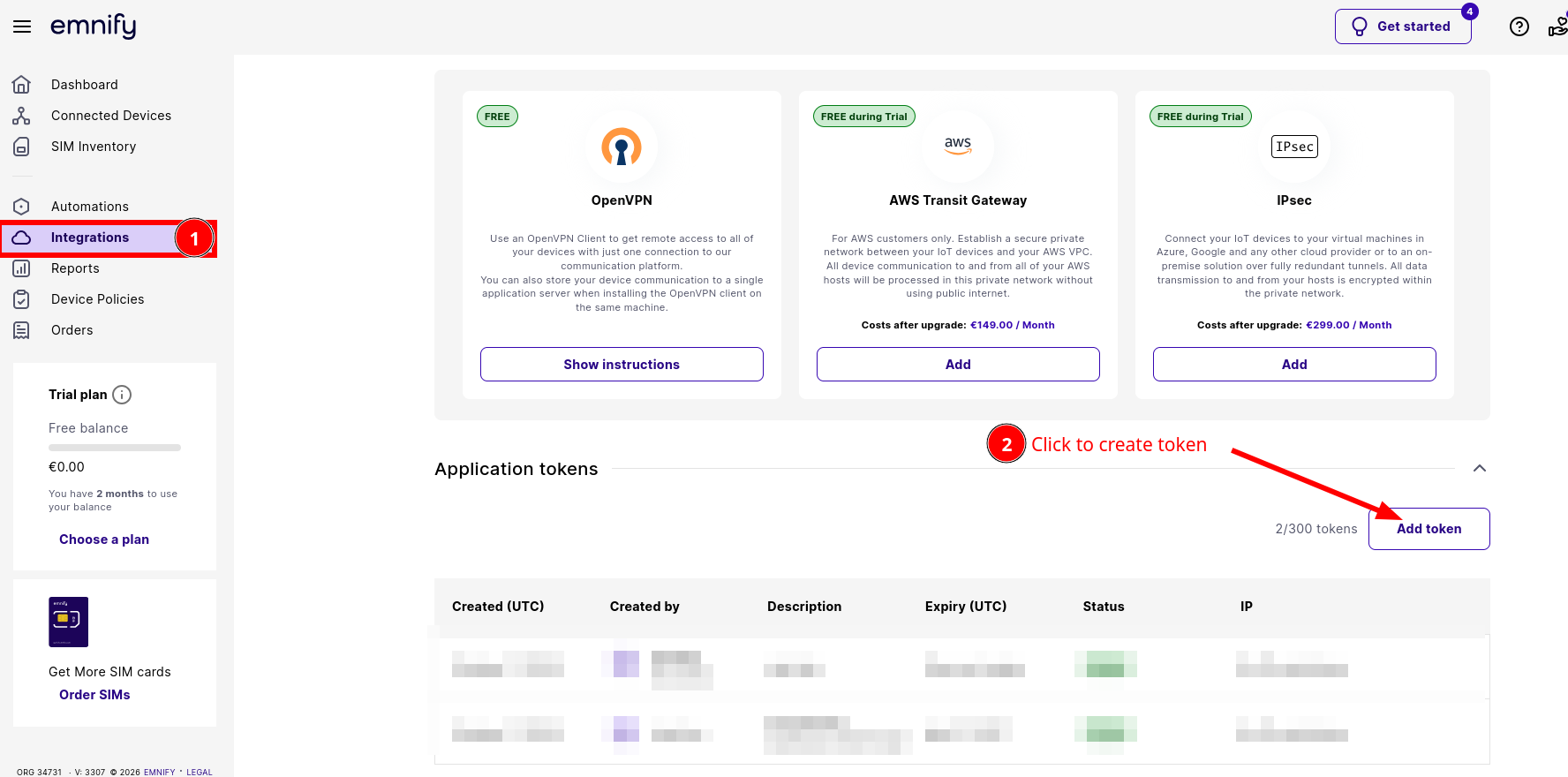
The token carries the role you assign to it and works in the Workspace it was created in. Administrator covers everything, User the day-to-day connectivity work, Observer a read-only view. To limit the agent, create the token in the Workspace it should manage with the narrowest role that covers the work you delegate.
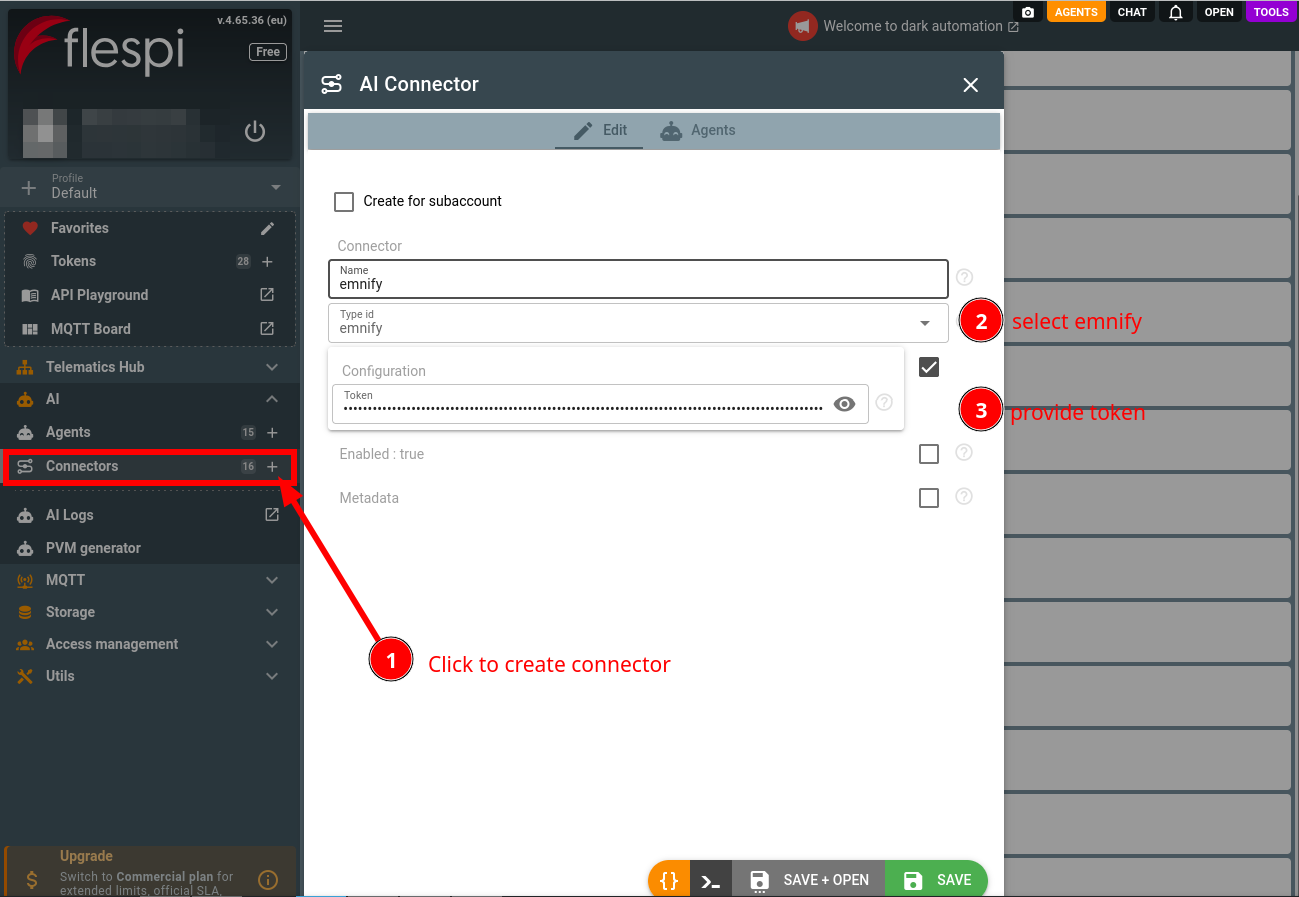
Create a connector of the emnify type: open the flespi panel, navigate to AI, then Connectors, click the "+" button, pick the type and paste the token:
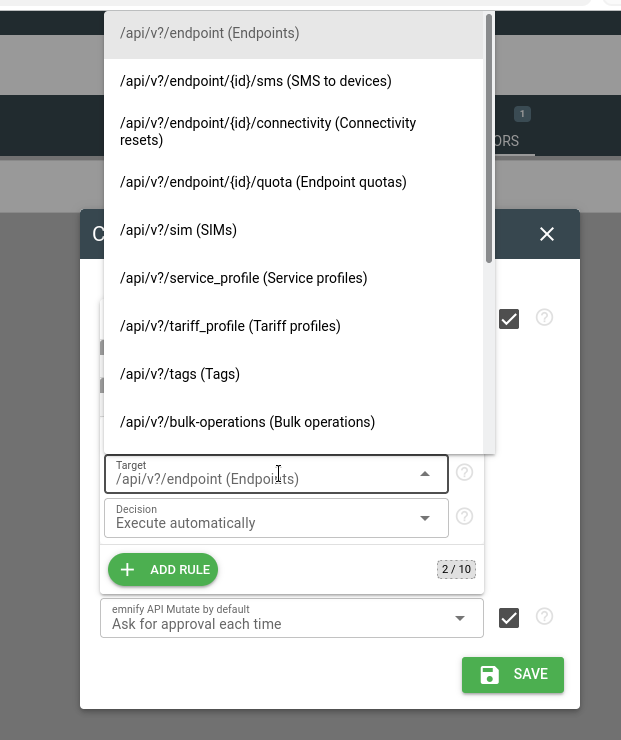
Assign the connector to your agent (create one if you have none yet), choosing the rules for the account-changing emnify API calls: the default, and above it a rule per part of the API you want handled differently: endpoints, SMS to devices, connectivity resets, quotas, SIMs, policies, tags, bulk operations and the rest. The pencil button on the Connectors tab of the agent opens the same rules at any time:
The token defines the ceiling. The agent works within its role and Workspace, and asks for a wider token when a task is out of reach instead of attempting calls that will fail. A revoked or expired token surfaces at the next call, and the agent asks you to reconnect the connector with a fresh one.
2. Work with the agent
The agent knows emnify: it consults the official emnify documentation and the API reference on its own, so you can discuss SIMs, devices, service and coverage policies, data limits, network events, usage and the Data Streamer the way you would with an emnify engineer.
Reading the account is free and autonomous, through a read-only surface that physically cannot change anything: SIMs and their status, whether a device is online and on which network, its data sessions, events and monthly usage.
Hand it the SIM housekeeping of a fleet and it designs the setup, then runs it on its own: a data limit on the service policy cuts a device off at the monthly volume, scheduled checks suspend the SIMs that hit it, report the ones that went silent, and send you a weekly usage and cost summary:
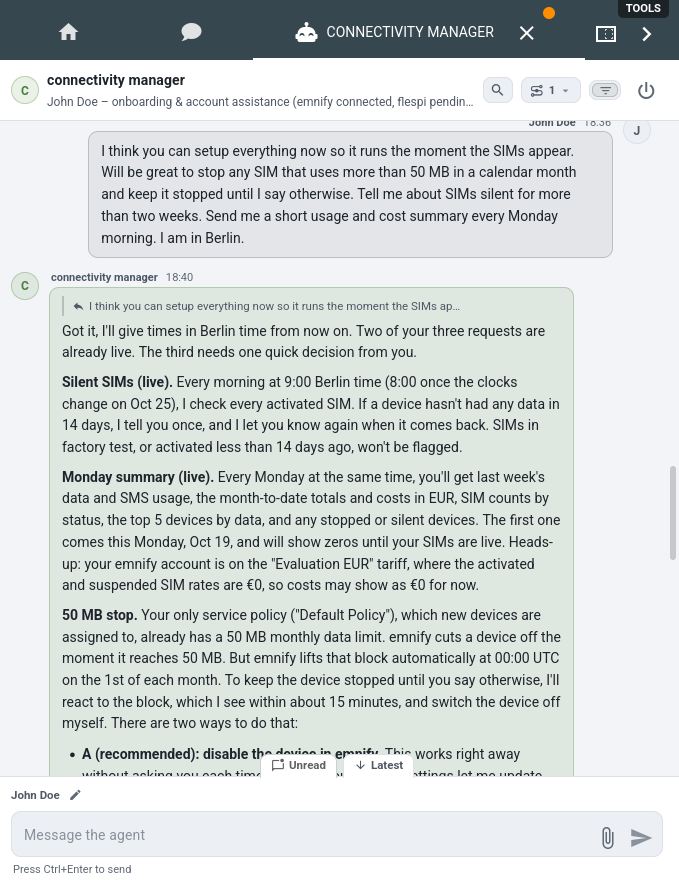
Cost comes with the right lever: an Activated SIM is billed whatever its device does, a Suspended one stops accruing from the next month and reactivates at any time. Pausing a device for cost is a SIM suspension, and the agent says so before touching a status. Every change waits for your approval unless you delegate it.
3. When the devices also report to flespi
When the agent also holds the flespi connector of the account the same devices report to, it reasons across both systems. It pairs a flespi device with its SIM by IMEI or phone number, and a silent tracker gets a connectivity check before a device check: SIM status, network attach, last data session, the events of the silent period. The agent tells you which side the evidence points to.
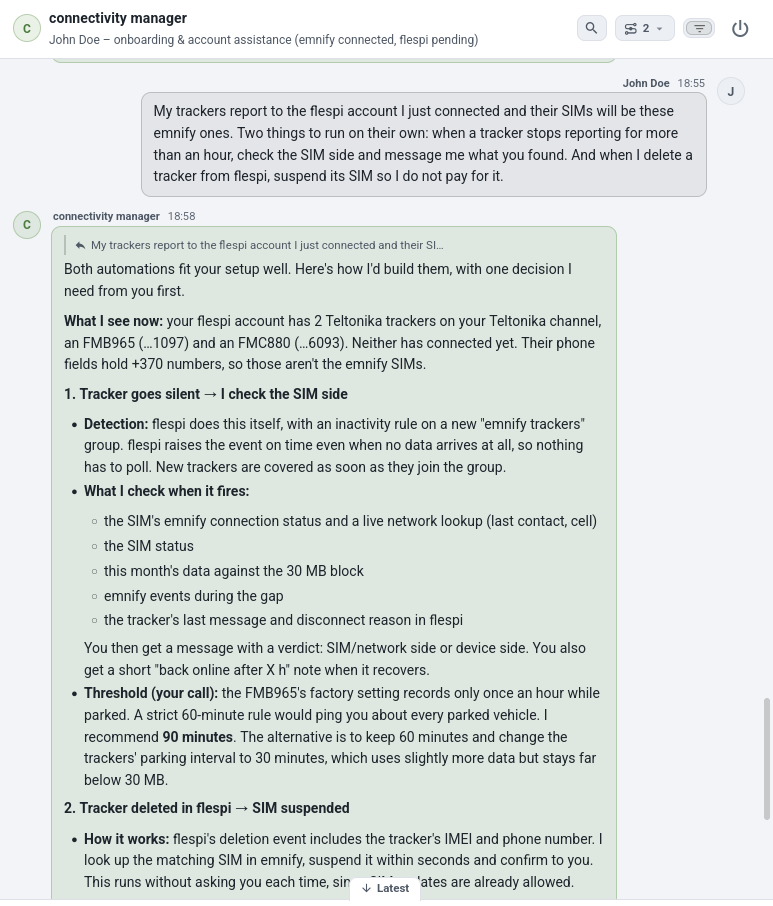
Ask, and the agent designs such checks across both accounts and runs them on its own: a tracker silent for an hour triggers the SIM diagnosis and a message with the findings, a tracker deleted from flespi suspends its SIM so you stop paying for it:
For live visibility the agent points an emnify Data Streamer at an HTTP channel in your flespi account: every attach, data session and block becomes a device message the agent watches, with the history retained in flespi. It can also build a web page with the connectivity state of every SIM, reading emnify directly under a read-only token of its own.
4. Approvals and logs
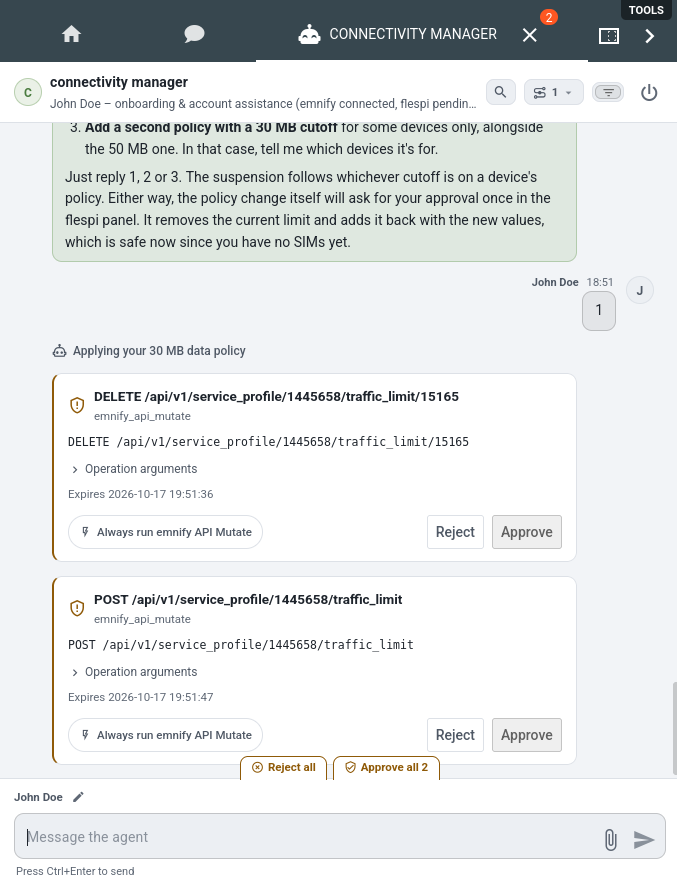
Every account-changing emnify API call goes through the agent approval rules as the emnify_api_mutate operation type, and by default each call becomes an approval request. Rules let you delegate the routine and keep the sensitive part under review, for example endpoint changes such as tags and policy assignment on automatic execution while SMS to devices, connectivity resets and SIM status changes still ask. You review the exact call, its path and its body before approving:
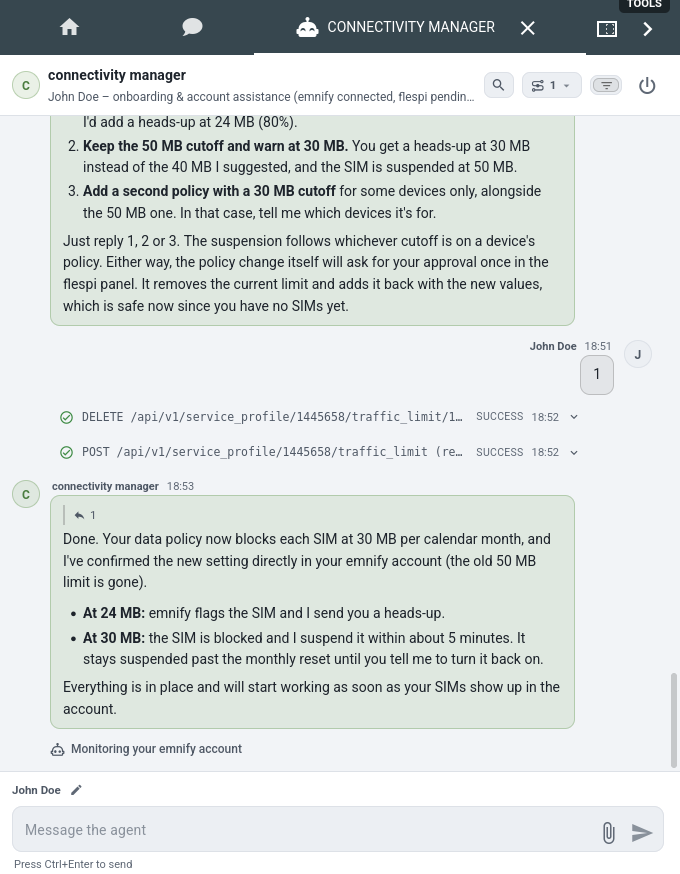
Approved, the calls run and the agent confirms the new limit against the live account:
Mind what the default protects before relaxing it: SIM suspension and deletion, policy changes that apply to every device on the policy, SMS and connectivity resets sent to physical devices, data streams, users and application tokens. The agent coordinates every change with you either way. The rules only decide whether you confirm each call before it leaves.
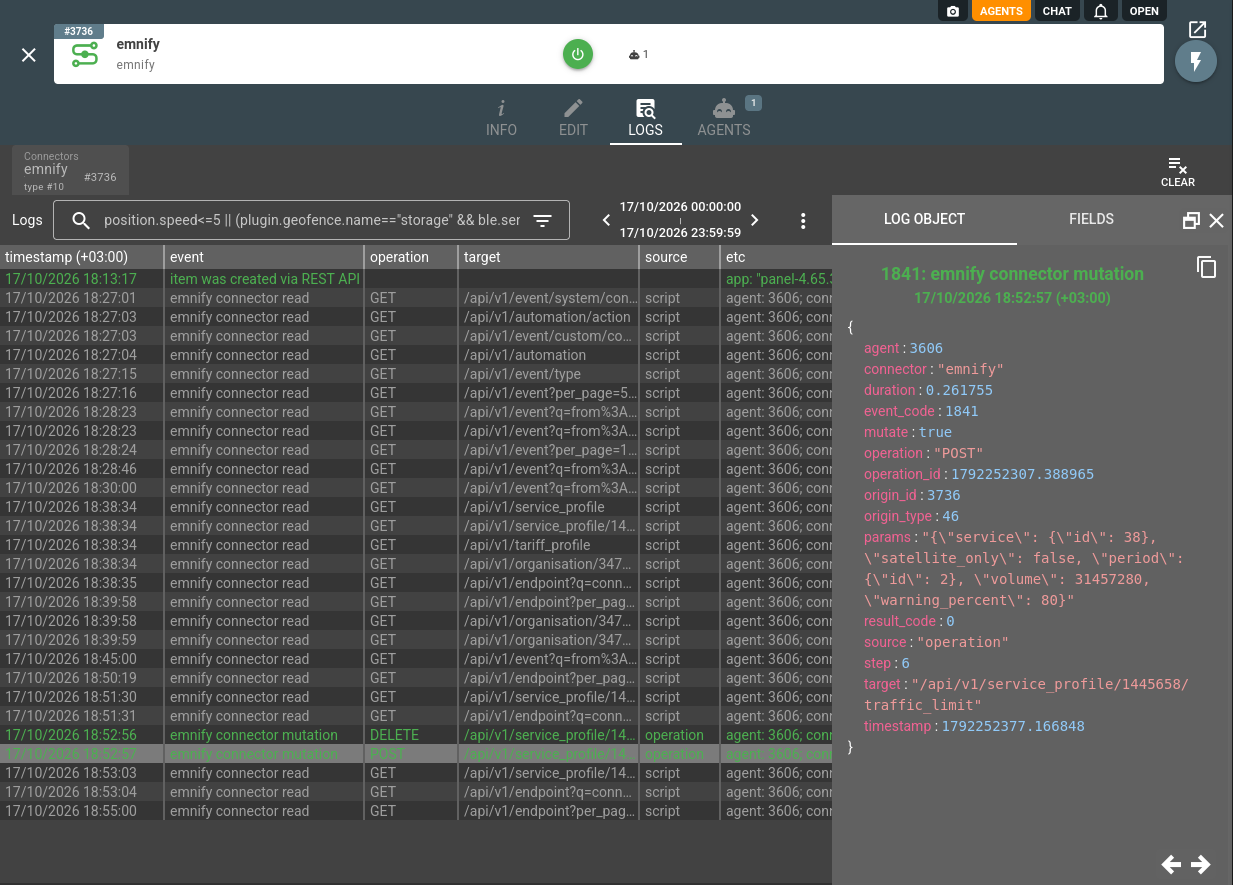
Executed mutations land in the agent conversation history as emnify_api_mutate_executed records, and every emnify API call the agent makes on your behalf, reads included, is recorded in the connector logs with the method, path and result:
To put the agent in front of the people you serve rather than yourself, pair the connector with a persona: the agent takes your name, speaks their vocabulary, and under branded disclosure never mentions flespi.
The emnify connector is one of several an agent can hold: browse the full connector list to give your agent more capabilities, such as a Telegram or Slack chat with the agent and its approval prompts.
Subscribe to the flespi AI and MCP change log to stay in sync with any updates.